Epilepsy-Related Reading List

By: Laura Dority MS, RD, LD & Daisy Argudin (parent advocate)

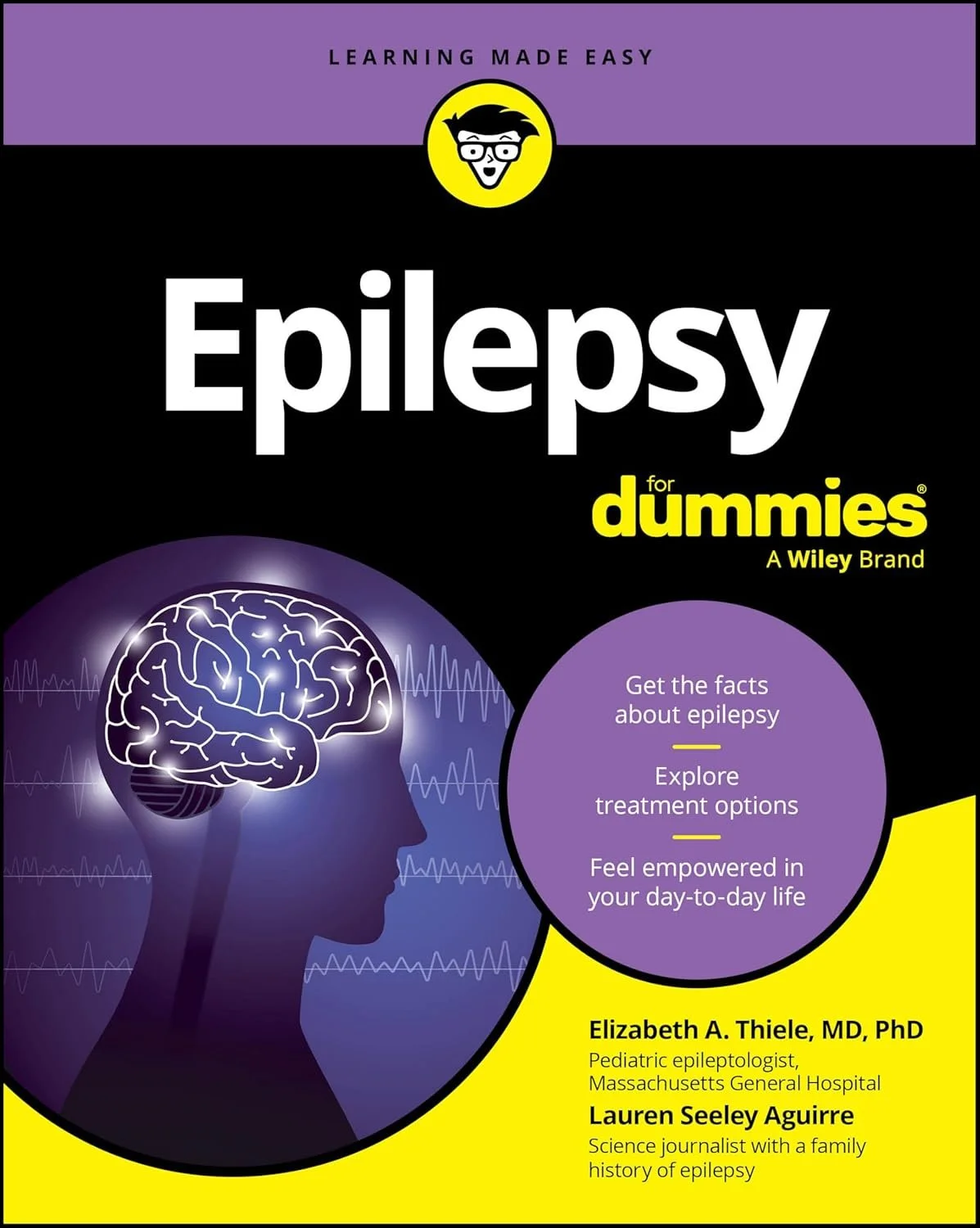
Epilepsy is hard… it’s hard for everyone… siblings, parents, grandparents, friends, and especially the kiddo with seizures. Epilepsy is complicated… there isn’t just one cure… one medication that works for one person doesn’t work for another…there are numerous different kinds of seizures and epilepsy syndromes. 

Epilepsy is not easy to explain… especially to younger children, so we compiled a list of books to help! 

Keto-Related

Krazy for Keto by Brandon Kopp (2023) 

The story of a young boy's successful journey on the medically prescribed Ketogenic Diet for Epilepsy. Based on the real-life experience of the author. 

After traditional medications failed to control his seizures, Brandon was admitted to the hospital where he initiated the Ketogenic Diet for Epilepsy in hopes of finding some seizure control. 

Brandon bravely learns how to acclimate to his new life on this restrictive diet while still attending school and socializing with other children. 

While not specific to keto, Gordy and the Magic Diet by Kim Diersen is a good option for children following any type of medically restricted diet. Unfortunately it is difficult to find but you may be able to find a copy at your local library or a used bookstore. Based on this list, it looks like the world could use more keto-specific books for children…..are you up for the challenge? 

For the next section of this blog, we have divided the list into a few subcategories:

  • Epilepsy-Related (for the patient) 

  • Epilepsy-Related (for friends and peers) 

  • Epilepsy-Related (for siblings) 

These books will help support your kiddo with epilepsy by giving them understanding and courage on their epilepsy journey. 

The Adventures of Buzz Bee by Jacqueline Ann Gibson (2015)

  • Buzz Bee has been feeling strange lately. He's been flying into flowers, falling over in the hive, and the worst thing of all: he has no idea why. After a visit to Dr. Glowden, Buzz Bee and his mommy finally find out what's going on - Buzz Bee has been having seizures. 

  • If your child is suffering from epilepsy, or has someone in their life with the condition, this book is a fantastic way to teach them about the disorder and how it's treated. 

  • It also reminds readers that those who suffer from epilepsy or any other disorder are just as normal as any other bee in the hive. 

The True Life Adventures of Spunky Monkey, The Magical Poodle by Lauren Michell Ruehring (2012)

  • Spunky Monkey The Magical Poodle is a dog with epilepsy who wanders off while at the park with his family and em"barks" on a day-long journey of self discovery. 

  • As he tries to find food, friends and medicine, he encounters a cast of funny, caring, helpful friends who give him hope, confidence and courage to find his way home. 

  • The True Life Adventures series uses real-life dogs to explore the issues of illness, disability and other life lessons from a gentle, entertaining and uplifting perspective that all children can relate to.

The Great Katie Kate Explains Epilepsy by M. Maitland DeLand (2014)

  • Jimmy and the other young patients in the neurologist's office get     a visit from the Great Katie Kate, a spunky redheaded superhero who appears when kids get worried. Katie Kate takes the children on a medical adventure to learn about the various forms of epileptic seizures and treatments.

  • This superhero saga provides an entertaining and indispensable tool for parents and medical professionals who are seeking a positive way to help young epilepsy patients understand their condition and deal with their fears. 

I Have Epilepsy. It Doesn’t Have Me by Jamie Bacigalupo and Judy Bacigalupo (2012)

  • Follow eight year old Jamie on her journey from being diagnosed with Benign Rolandic Epilepsy at age five. 

  • Jamie persevered and overcame her epilepsy and went on to help other children by starting her own non-profit that provides gifts to children in over five states.

Mommy, I Feel Funny! A Child’s Experience with Epilepsy by Danielle M. Rocheford (2009)

  • Based on a true story, Mommy, I Feel Funny! introduces the reader to Nel, a little girl who is diagnosed with epilepsy. 

  • The story takes you through the days following Nels first seizure. Suddenly, Nel and her family are faced with thoughts, fears and emotions that come with the discovery, understanding and acceptance of epilepsy.

Let’s Learn with Teddy about Epilepsy by Dr. Yvonne Zelenka (2008)

  • A book to help children and their families identify some of the symptoms of epilepsy and understand in an illustrative and enjoyable manner the doctor's visit. 

  • The book tells the story of a young boy first diagnosed with epilepsy, the doctor's visit, the different tests and possible treatment and his relationship with his parents and friends.

And Down Went Poss & Poss’s School Days Book by Anne Little

  • And Down Went Poss is a book that examines the feelings of a baby possum when he is first diagnosed with epilepsy. Little Poss feels sad and unhappy, but with help from a special friend, he comes to realise that we are all different and that life can still be full of fun. 

  • Poss’s School Days Book is the sequel to And Down Went Poss. It looks at what happens when Poss has a seizure one day at school. 

  • These books include ideas for activities which enhance the child’s understanding of the story.

Going to school and making new friends when you have epilepsy can be scary and intimidating.  Your kiddo might be concerned with fitting in. Other children’s exposure to epilepsy and therefore knowledge may be limited and incorrect. These books are great options for the classroom and friend groups to help support inclusivity and understanding. 

Did You Know That I Have Epilepsy? by Stacey Crouch (2020)

  • A true story of a boy named Cody, who has been diagnosed with epilepsy. 

  • It was written to help kids learn more about seizures and what could happen from a child’s perspective. 

  • It’s easy for children to understand and has colorful, engaging pictures.

Milo’s Day At School by Shawnee Walker (2020)

  • This book shares a heartwarming, informative story about a child who has a seizure at school.

  • The author informs young readers about epilepsy, and what to do if they see someone have a seizure in a kid-friendly language. 

Zeeba and the Seizure by Michaela Barnes (2020) 

  • A children's book that promotes seizure and epilepsy awareness. 

  • Zeeba Zebra planned to have a regular school day but began feeling unwell. Something unusual and scary happens that leads to an unexpected field trip to the hospital. 

  • A story that encourages children to embrace empathy, friendship, and courage.

Andie and the Storm by Lexie Griffiths (2021) 

  • Simplistic for young children to learn about seizures and how to help

  • Rhyming makes it fun to read aloud as a family, class, or as friends

  • Written and illustrated by a mom with first-hand experience and knows how difficult it can be to explain seizures to children

Taking Seizure Disorders to School: A Story About Epilepsy (Special Kids in School) by Kim Gosselin (2001)

  • This story dispels the myths and fears surrounding epilepsy in a positive, upbeat and entertaining style while explaining seizures in an understandable fashion.

Is Epilepsy Contagious? by Julie Devinsky (2011)

  • This book brings the story of epilepsy alive with easy-to-understand text and illustrations that are both informative and interesting for many questions kids ask about epilepsy. 

I Know Someone with Epilepsy (Understanding Health Issues) by Vic Parker (2011)

  • This book introduces readers to what epilepsy and other seizure disorders are, how they affect people, and what they can do to be a good friend to someone living with epilepsy.

Can I tell you about epilepsy? A guide for friends, family and professionals by Kate Lambert (2012)

  • Ellie, a young girl with epilepsy, invites readers to learn about epilepsy from her perspective. 

  • Ellie helps children to understand the obstacles that she faces by telling them what it feels like to have epilepsy, how it affects her physically and emotionally, how epilepsy can be treated and how the condition is often misunderstood. 

  • Ideal introduction for children, parents, friends, and professionals to make sense of the condition in its varying forms and will be an excellent starting point for family and classroom discussions.

We know it can be hard for siblings to have a brother or sister with epilepsy or any kind of special health care need. They may feel left out, scared, or even helpless to help their sister or brother. This list will help normalize their emotions and give ideas on how they can be brave and courageous for their sibling with epilepsy. 

Becky the Brave: A Story about Epilepsy by Laura Lears (2002) 

  • This story dispels the myths and fears surrounding epilepsy in a positive, upbeat and entertaining style while explaining seizures in an understandable fashion.

  • A story about a young girl's struggles with epilepsy. Becky is always helping her younger sister, Sarah. Sarah looks up to her brave older sister - until one afternoon when Becky suffers a serious seizure. When Becky recovers, she retreats into herself and refuses to return to school, anxious that her condition not be revealed to her new classmates. It is now Sarah's turn to be brave for her sister.

If you come across any other books that you think should be included, please leave us a comment and let us know!

Note: Only books that were available on Amazon as of 4/2023 were included on this list.

Quality Nutrition Sources - Why Quality Matters?

By: Kayla Hansmann, MS, RD, LD, CLC

When thinking about diet quality – across the spectrum of all diets, you’d be hard-pressed to find someone who would argue that the quality of what we’re eating isn’t important. While that might not be one of the first steps in implementing a medically prescribed ketogenic diet, it can certainly take precedence down the road once some of the other critical boxes are checked and everyone is feeling comfortable with how to navigate this new way of eating.

Dietary choices and lifestyle habits can be daunting to implement all at once so most dietitians will recommend some initial tweaks and changes to get you on your way to the desired diet endpoint. When doing so, most individuals and practitioners note that even these simple (yet consistent!) nutrition changes up front result in better control of seizures as well as improved behavior overall. The underlying theme in these changes includes reduced amounts of processed and packaged foods, no added sugar, and less concentrated sources of carbohydrates overall. 

Let’s dig into this a little further. Stripping away processed foods leaves us with whole, natural foods that provide higher satisfaction for both our palate and our body’s systems. Processed foods are more likely to include ingredients that are: 

  • harder for our bodies to digest

  • more likely to lead to abdominal distress (constipation or diarrhea)

  • prone to causing glucose spikes that lead to energy rollercoasters (often exhausting our body’s insulin)

  • more likely to lead to bloating and/or increased gas

  • providing an excess of calories and/or unhealthy fats without a ‘place to go’

…in other words: likely to increase inflammation which can increase our prevalence of acute or chronic illness and undesirable weight trends.

One easy way we can look at creating a plate or a day’s worth of meals that prioritize whole, natural foods is by following the “one ingredient rule”. Even if a food isn’t fresh or raw, you can flip over to the ingredient list to ensure each of the ingredients listed is just ONE ingredient, or itself, in whole-unadulterated form. Cut out the ingredients, cut out the processing! 

Once you’ve successfully gotten the majority of your meals and snack to encompass the one ingredient rule, you will notice your body starting to crave these foods more and a reduced desire to grab or reach for its other processed counterparts. Our bodies are smart and adapt—once you get to a certain point, your body CRAVES what it is actually eating!

Let’s recap, ways to add quality to our diet and why it matters, with an emphasis on keto-friendly sources:

Proteins

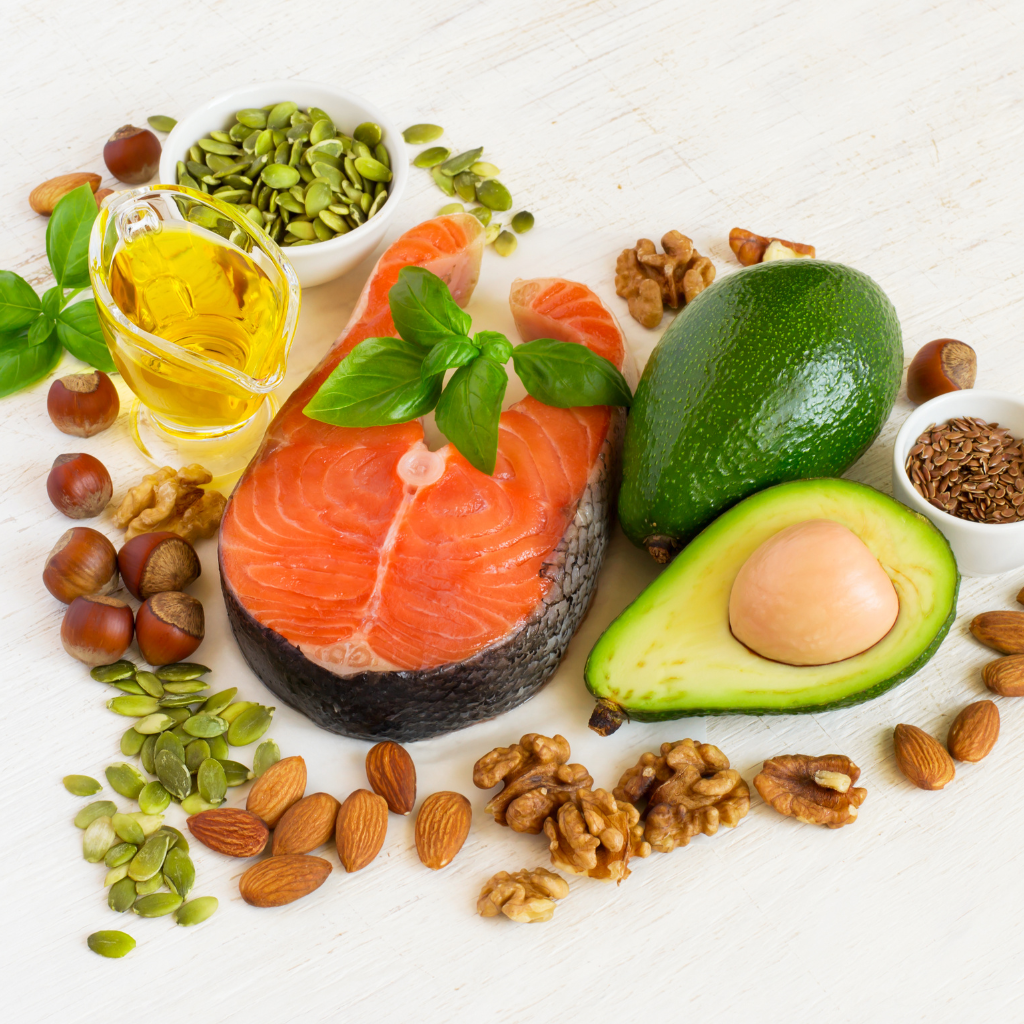
  • Aim for minimally processed proteins (i.e. whole chicken, eggs, ground turkey, various cuts of steak) – these foods are satiating and can keep us feeling full longer while also contributing important and highly available amino acids, B vitamins, iron, zinc, and choline. When possible, choose pasture-raised poultry for the higher amounts of omega 3’s found in the eggs and meat. 

  • Choose high-fat dairy which is also helpful in terms of satiety but also a good source of calcium, phosphorus, and vitamin D for strong bones, growth, and development.

  • Try and work in fresh fish a few times a week – omega 3 city! The EPA and DHA (omega-3 fatty acids) provide tremendous benefits for your heart, brain, lungs, and circulation.

Carbohydrates: 

  • Fruits & veggies – think: The higher the fiber, the lower the net carbohydrates. Fiber is not only FILLING but feeds the healthy bacteria in our gut (a happy gut = better absorption of important nutrients and increased bowel motility).

Fats: 

  • Nuts & seeds – great ways to add crunch with a fantastic mix of healthy fats, fiber, and often a better source of sodium to naturally “salt” our diet. A favorite keto staple is flaxseed and chia seeds which are loaded with alpha-linolenic (ALA) fatty acids – a commonly forgotten omega-3!

  • MOST IMPORTANTLY FATS – think half solid, half liquid. If we can make at least 50% of our fats unsaturated (usually liquid) and the other 50% or less saturated (usually solids: butter, coconut oil, fats from animals), we are on our way to improved fasting blood levels of triglycerides and cholesterol. Butter/ghee is a great way to pack a punch, but we want to ensure that we’re incorporating mono- and omega-3 poly-unsaturated fats to boost our HDL cholesterol and provide protection against heart disease as well as packing a dose of potent antioxidants. Amazing monounsaturated fat sources are extra virgin olive oil and avocados. 

The final trick to adding quality? Self-love and self-regulation! Without these two essential ingredients, we’ll be cycling through the roundabout of shame and guilt that will make it very difficult to lead to healthy habits long-term. A calm and stress-free environment helps us digest food better, enjoy food more, and be more likely to grab the more nutritious choice time after time.

Hippity-Hoppity Keto-Friendly Easter Recipes & Activities

Recipe and Content Contributor: Taylor Parrish, RDN, CLC, LD

Updated: March 2026

Wow, I can’t believe it’s already springtime and a furry bunny has been spotted hopping around your neighborhood! Whether you celebrate Easter for its biblical significance or not, most families take part in the Easter festivities – egg hunts, baskets, brunch/dinner, etc. 

Most holiday festivities include food and being on keto and not eating what other kids are eating can be very difficult. However, as a parent, we can refocus on what’s important and how we celebrate different holidays. Being on keto is a great way to start new traditions or refresh old traditions where holidays aren’t just about the treats involved. Don’t get me wrong – treats are yummy and there’s a place for them, but if you find yourself struggling with holidays because of the treats, now is a great time to find a new way to celebrate. 

Check out this article from Country Living that may help you celebrate Easter a little differently this year. Although not all these ideas are appropriate for keto, there are some cute ideas to consider that don’t involve food.  And I don’t know about you, but my kiddos just love the hunt for the Easter eggs…not necessarily what is inside of them!

Also, check out our family’s toilet paper bunnies from Easter in 2020 – when TP was a hot commodity.

Here are some more non-food ideas to help you celebrate Easter: 

  • Fill eggs with little toys, coins to buy a smaller toy at the store, Bible verses, etc.

  • Get outside! Take a walk, plant some flowers, ride your bike, and/or drop off a basket for your neighbors.

  • Check out these fun confetti eggs from Amazon

  • Decorate easter eggs 

  • Set up an Easter scavenger hunt that ends with a cool new toy or book! 

  • Oodles of options for Easter crafts & activities on Amazon such as: 

Check out these store-bought Easter candies and kitchen gadgets: 

Favorite Easter Recipes 

We hope these activities, ideas, and recipes make your keto Easter and springtime a little bit tastier! Please share your tips and tricks on how you and your keto hero celebrate the Easter season when navigating a ketogenic diet.

Managing Ketosis: The Ins and Outs of Keeping Ketosis Safe

Content Contributor: Taylor Parrish, RDN, CLC, LD

Ketones, ketones, ketones…..when you or your child are on a ketogenic diet it may feel like ketones are running your life! Your doctor asks your ketone level, your dietitian asks your ketone level, and you are likely tracking your ketone levels at home but what is all this business about ketones really about? Let’s take a deep dive into what factors impact ketones and why you may notice your ketone levels vary! 

What factors can lower your ketone level?  

  • Illness & Stress: Sickness (without vomiting and diarrhea) may lead to a decrease in ketone levels. Additionally, stress hormones (often a factor with illness) can lead to an increase in glucose levels which then can lower your ketones.  

  • Weight Gain: While normal weight gain is appropriate and necessary for children, excessive weight gain can lead to lower ketone levels. Your dietitian will keep a close eye on your child’s weight gain to make sure it’s appropriate for her/his individualized plan. 

  • Hidden Carbohydrates: Have you stopped measuring? Have you started eyeballing portions? If so, has your “eyeballing” portions gotten a bit incorrect?  Double check your portion sizes and make sure they are accurate. In addition, remember carbs can be hiding in many medications, sweeteners and herb/spice blends. 

  • New Foods: If you have added a new food into your keto plan (especially a “keto” marketed food), double check the amount of sweetener and fiber in the product. Even if it’s a keto approved sweetener or sugar alcohol, some people respond differently to these ingredients – this is why it’s important to track, especially when trying new foods, to see a response.  It is important to also note that some sweeteners can take up to 24 hours to take effect. 

  • Inadequate Carnitine: Carnitine is an important factor in fat metabolism because it helps fat get used for energy.  Ketogenic diet therapy utilizes more fat than those not on keto so the need for carnitine increases. It is common to have insufficient carnitine when on ketogenic diet therapy so be sure to keep up with your regularly scheduled lab work to get an accurate measure of your carnitine levels.   

  • Time of Day: Ketones are generally lower in the morning due to the dawn phenomenon which is when cortisol (a hormone) is released in the morning. Cortisol tells your liver to use up stored glucose (glycogen) because your body has gone more than 4-5 hours without energy (food). The pancreas then secretes insulin. Insulin can decrease ketones. In addition, as you eat fat throughout the day your ketone level generally increases.  

  • Inadequate Fat Intake: Be sure you are eating your recommended amount of fat daily. If you aren’t eating enough fat as prescribed by your keto team, you likely will have lower ketone levels. 

  • Hydration: Remember that urine ketones are hydration dependent. If you drank a much larger amount of fluids than normal, it may decrease the reading on your urine ketone strips due to your urine being more diluted.  

  • Body Care Products: Some individuals may be sensitive to carbohydrates in body care products such as lotions and shampoos.  While this may not apply to all individuals, if you are really struggling with ketosis and you’ve exhausted all other avenues, take a deep look into your body care products. The Charlie Foundation and the Keto Hope Foundation collaborate each year on the resource, “No and Low Carb Personal Care Products Guide,” which is available for download from the Charlie Foundation store for $8.99.  It can be very helpful to find products such as sunscreen, toothpaste, shampoo and lotion (to name a few) that are keto friendly.

What factors can increase your ketone level?  

  • Dehydration: Ketogenic diet therapy has a diuretic effect, so getting enough hydration is essential in maintaining a safe level of ketosis. Being in ketosis puts your body into more of an acidic state, which is why your keto team looks at your CO2 (bicarbonate) levels– a measure of acidosis. The goal is to induce ketosis but prevent excessive acidosis which can be exacerbated when we are dehydrated. 

  • Weight Loss: If you are losing weight due to inadequate calorie intake, you will start to burn your own fat stores which means higher ketones. 

  • Medium Chain Triglycerides (MCT) Oil: MCTs are easily absorbed and bypass much of the digestion process. Because of this easier digestion, MCTs provide a quick energy source for ketone production. If you want to learn more about MCT oil, check out our blog, The Adventures of MCT Oil

How Do I Best Manage Ketosis? 

  • Eat meals and snacks at the same time each day as prescribed by your keto team. Avoid skipping any meals/snacks. 

  • Monitor weight closely. 

  • Communicate with your keto team frequently. Keep them informed of ketone levels, glucose levels (if applicable), seizure control and your child’s behavior. 

  • Track your ketones as recommended by your keto team. Whether you are using urine or blood ketone measurements on your ketogenic journey, it’s important to track and report your levels to your keto team. They may ask you to check once a day or several times a day – everyone’s plan is different, but your keto team can use this information to tweak your ketogenic diet to obtain the best seizure control possible. 

  • Track your meals in a food tracking application such as MyFitness Pal (Note: This applies to those on a Modified Atkins Diet or Low Glycemic Index Treatment.) 

  • Stay hydrated. If you do not know your fluid goal, ask your keto team! 

  • Be aware of signs/symptoms of excessive ketosis including nausea, vomiting, rapid or shallow breathing, extreme sleepiness, and/or facial flushing in combination with high ketones. Typically, excessive ketosis cannot be identified by just ketone levels alone – it’s best to look at the big picture of symptoms alongside high ketone levels. If your child has any signs/symptoms of excessive ketosis, notify your keto team. 

Disclaimer: The advice mentioned in this article is not medical advice and should not be taken as medical advice. You should always check with your medical provider if you have any questions about your ketone level. 


Constipation and Keto for Epilepsy

By: Sarah Metzger, MS, RD, LD, CDCES 

Never underestimate the power of a good bowel regimen. Constipation can wreak havoc in anyone’s life, and for those with epilepsy on the ketogenic diet, constipation can become the down-right enemy! For people who have neurological diseases, such as epilepsy, the connection between the brain and the gut can get disrupted. Because the brain coordinates the nerves and muscles needed to perform bowel movements, any neurological diseases or injuries can impact the signaling as well as the contraction of muscles in the colon. Constipation is a common side effect of multiple other diseases that affect the brain, such as stroke, Parkinson’s disease, spinal cord injury, and multiple sclerosis. Although there is little available data, epilepsy also correlates with higher levels of constipation (1). Some anti-seizure medications may also cause constipation, as 27% of patients from a 2021 study who were taking one or more anti-seizure medications experienced constipation. Among patients taking multiple anti-seizure medications, constipation was experienced most frequently among those taking carbamazepine, phenobarbital, and Dilantin (1).

When we add in the ketogenic diet, things start to slow down even more. Constipation is a well-known side effect of the ketogenic diet. The classic ketogenic diet has approximately 90% of its calories coming from fat. Fat moves through the body at a slower rate than other nutrients. This can be advantageous because it can keep one fuller for longer, but it also slows down digestion leading to constipation. Even the Modified Atkins ketogenic diet, which has around 60-70% of calories from fat, can cause the body’s digestion to slow down significantly too. Additionally, the ketogenic diet may be lacking in fiber due to low carbohydrates and low fruit/vegetables in the diet. However, there are some keto-friendly fiber foods, which will be discussed later in this article. 

One of the best ways to help prevent constipation is hydration, hydration, hydration - meeting or exceeding one’s fluid needs is an absolute must! Talk to your dietitian for your child’s specific fluid goals. Another way is with movement! Talk to your physical therapist for specialized movements for constipation specific to your child. Because of the addition of the ketogenic diet, medication may also be necessary to help with gut regularity especially for tube-fed patients. 

There are two main categories of medications that help constipation: the ‘Mushers’ and the ‘Pushers’. The ‘Mushers’ are a group of medications that helps draw water into the stool making it easier for stool to pass through the colon (also known as osmotic laxatives).  The most common keto-friendly "musher" is MiraLAX® (polyethylene glycol 3350) and is typically the first line of treatment.  Some side effects may include looser and/or more frequent stools. It’s a flavorless powder that can be easily added to water flushes/drinks throughout the day (2). Another ‘musher’ is Milk of Magnesia (also known as magnesium hydroxide or citrate). It also works by helping draw water into the stool. Like MiraLAX®, common side effects include looser and/or increased frequency of stools.  Lactulose is another ‘musher’ but not typically used on the ketogenic diet due to possible carbohydrate content. 

Insoluble fiber is an honorary musher as well. It acts in the digestive system by bulking and softening the stool because it is not dissolvable in fluids. Instead, insoluble fiber absorbs fluids in the gut and sticks to other waste materials to make softer stool. Fiber can be harder to consume on the ketogenic diet because most sources are high in carbohydrates. However, nuts, cauliflower, green beans, carrots, and berries can fit into the ketogenic diet. Another interesting food that contains 85-93 % insoluble fiber is chia seeds. Chia seeds also have an impressive lipid content, therefore, depending on the brand, chia seeds are ~1:1 ketogenic ratio and may fit into your child’s ketogenic diet (3). 

A subcategory of mushers could be called ‘gliders’. Gliders also help stool move through the colon by using lubrication. One commonly used ‘glider’ is mineral oil. Mineral oil helps to lubricate the stool and helps the stool retain its water content for a similar effect of making it easier to pass. Though some oil may leak out with the stools, there are not many significant side effects of mineral oil.

And now for the ‘Pushers’. This category of medications works differently and can oftentimes be the winning ticket for people who live with neurological dysfunction. Senna (Senokot®) is made from the leaf of pod of the Senna alexandrina plant. It comes in an over-the-counter medication and in some teas, such as Smooth Move® tea. It works to irritate the colon to help it contract and expel stool. Some typical side effects can be bloating, cramping or a general upset stomach (4). Glycerin and Dulcolax® (bisacodyl) suppositories are other colon stimulant options. They are both inserted into the bum to help lubricate and stimulate the colon to move. Glycerin suppositories contain purified water, sodium hydroxide, stearic acid and 90% glycerin (5). Dulcolax® has the active ingredient of bisacodyl that helps stimulate and hydrate the colon. Suppositories tend to work more quickly and are used on a shorter term vs. Miralax® or senna. Suppositories may leak out and/or may cause irritation, cramping, and bloating (6).

Always remember that adequate water intake is necessary for these medications or remedies to work properly. Talk with your doctor/dietitian about your child’s ideal fluid needs. If you are wondering about long-term side effects of these medications, please talk to your doctor as that is out of the scope of this post.  What products, supplements or nutrition changes have made a positive difference in your keto journey world?  Share here as a comment!

Reindeer-Inspired Keto Friendly Holiday Recipes & Activities

Recipe and Content Contributor: Taylor Parrish, RDN, CLC, LD

Like Halloween and Thanksgiving, food is often one of the main spotlights of the Christmas season. Check out these keto friendly Christmas activities and recipes. Your keto kiddo doesn’t have to miss out on this magical time! From the whole team at the Keto Hope Foundation, we hope you find joy in this season and have a very Merry Christmas, Happy Hanukkah, and a Happy New Year! 

First, check out these fun holiday ideas where food is not the focus!  

Now, let’s look at some easy and convenient store-bought items that can brighten your holiday.* 

*Always check with your keto medical team if the above-mentioned products are appropriate for your specific ketogenic diet. Some of these products do contain artificial sweeteners and sugar alcohols that may not be appropriate for everyone. 
Recipe 1: Keto Cinnamon Rolls (makes ~9 cinnamon rolls)

Dough Ingredients: 

  • 112 g (1 cup) almond flour 

  • 26 g (1/4 cup) ground flax 

  • 7 g (1 Tbsp) coconut flour 

  • 48 g (1/4 cup) erythritol 

  • 8 g (2 tsp) baking powder 

  • 1.5 g (1/4 tsp) salt 

  • 56 g (1/4 cup) butter, softened 

  • 50 g (1 large) raw egg 

  • 3 g (1/2 tsp) vanilla extract 

Cinnamon Streusel Filling Ingredients: 

  • 56 g (1/4 cup) melted butter 

  • 36 g (3 T) erythritol 

  • 7 g (1 T) cinnamon 

Directions: 

Preheat oven to 325°F. Line pan with parchment paper on a flat sheet or 8x8 square pan. Combine dry ingredients in large bowl and add softened butter and distribute through dry ingredients. Combine egg and vanilla, stir. Add to dry mixture. Place dough on large sheet of parchment paper then fold paper in half so that the paper is sandwiching the dough. Start to work the dough into a flat rectangle between the parchment paper, using a rolling pin if needed. Once flattened, the rectangle should measure 9 x 12 inches. 

Next make cinnamon streusel filling by combining melted butter, erythritol, and cinnamon in a small bowl. Spoon filling over rolled out dough and spread to cover. Using parchment paper as a guide, start from one of the shorter ends and begin rolling slowly. Once you have completed rolling, use a knife to cut the roll into 9 slices, and place each slice cut side down in the pan. Bake for 15-20 minutes and allow to cool. 

Nutrition Information (1 cinnamon roll): 190 calories, 18.1 g fat, 4.2 g protein, 2.55 g net CHO at a 2.65:1 keto ratio

Recipe 2: Snowflake Toast

Ingredients: 

  • 35 g fresh strawberries 

  • 2 slices (56 g) L'Oven fresh bread 

  • 2 Tbsp (28 g) butter 

  • 2 Tbsp (10 g) unsweetened shredded coconut 

  • 2.5 oz (70 g) cream cheese (block) 

Directions:

"Toast" bread with butter. Spread cream cheese on bread and sprinkle with unsweetened shredded coconut. Serve with 35 grams strawberries.

Nutrition Information (entire recipe): 586 calories, 55.4 g fat, 16.1 g protein, 5.8 g net CHO at a 2.5:1 keto ratio 

Recipe 3: Cheeseball 

Ingredients: 

  • 8 oz (224 g) cream cheese, softened 

  • 1/2 cup (52 g) shredded cheddar cheese 

  • 1/2 cup (50 g) chopped green olives 

  • 1/4 cup (16 g) chopped green onions 

  • 1/2 cup (50 g) chopped pecans - for outside 

  • 2 Tbsp (8 g) raw parsley - for outside 

Directions: 

Combine all ingredients (except pecans and parsley) and shape into a ball. Lay out plastic wrap (enough to cover cheeseball) and put pecans and parsley on top of it (centered). Place cheeseball on top of pecans and parsley and roll to cover the outside (it's OK if it doesn't cover the entire cheeseball). Wrap up with the plastic wrap. Place in fridge until ready to eat! Serve with raw vegetables (carrots, cucumbers, etc.) or try these keto friendly almond crackers from the Charlie Foundation. 

Nutrition information (entire recipe): 1430 calories, 138.8 g fat, 32.6 g protein, 13.1 g net CHO at a 3:1 keto ratio

Recipe 4: Ham & Au Gratin Cauliflower (makes 2 servings) 

Ingredients: 

  • 1 small head (265 g) of cauliflower, chopped (weigh this then steam) 

  • ½ cup (120 g) cream

  • ¼ cup (28 g) cheddar cheese, grated

  • ¼ cup (56 g) butter 

  • 2 oz (56 g) Ham (Off the Bone Black Forest ham) 

  • Salt and pepper, to taste 

Directions: 

Steam the cauliflower and place in a dish. Melt the cheese and butter and mix well, then add the cream and combine. Pour sauce over the steamed cauliflower and mash to desired consistency. Divide into two servings then top each serving with 1 oz (28 g) ham. 

**Could consider baking this in the oven for a crunchier & well-done texture.

Nutrition information (entire recipe): 1060 calories, 101 g fat, 24.4 g protein, 12.8 g net CHO at a 2.7:1 keto ratio

Recipe 5: Chicken and Cabbage Soup (a great option for New Year’s Day) 

Ingredients: 

  • ½ cup (120 g) chicken broth, Imagine Organic 

  • 1/4 cup (40 g) raw green cabbage, shredded 

  • 1 Tbsp (10 g) raw onion, diced small 

  • 1 clove (4g) raw garlic, diced fine 

  • 1 oz (28 g) cooked chicken breast, diced - for higher ratio, can use dark meat chicken 

  • 1 Tbsp (15 g) butter 

  • 1 Tbsp (15 g) olive oil 

  • 1 Tbsp (15 g) Hellman's mayonnaise 

  • Salt & pepper, to taste 

Directions: 

Add the butter and olive oil to a small pot. Over medium low heat, melt the butter. Add the cabbage, onions and garlic to the butter and oil. Sautee until the vegetables begin to soften. Add the broth and chicken to the vegetables. Cover and let the soup simmer over low heat until the vegetables are very soft. Remove the pot from the heat and add the mayonnaise. Use an immersion blender to puree the soup. 

Note: If the soup reduces too much, you may add a little water. The mayonnaise is used to help keep the ingredients emulsified once it has been pureed. If you prefer not use mayonnaise, heavy cream or additional butter and oil may be used in its place. Pureeing the soup is optional. 

Nutrition information (entire recipe): 420 calories, 40.4 g fat, 10.2 g protein, 3.9 g net CHO at a 2.85:1 keto ratio. 

Recipe 6: Hot Chocolate

Ingredients: 

  • 2 Tbsp (30 g) cream 

  • 1 tsp (2 g) unsweetened cocoa powder (Hershey’s) 

  • 1 cup (240 g) unsweetened almond milk 

  • Sweetener, to taste

  • 5 total (~8 g) Max Mallows 

Directions: 

Combine all ingredients (except Max Mallows) in a microwave safe container and microwave until desired temperature. You can also use the stove top to warm ingredients as well. Top with 5 Max Mallows

Nutrition information (entire recipe): 250 calories, 24.3 g fat, 3.1 g protein, 4.6 g net CHO at a 3.1:1 keto ratio 

*To increase the ratio, increase the amount of cream inside the recipe or added on top as a “whipped” cream. To decrease ratio, increase Max Mallows or decrease amount of cream.

Looking for more amazing keto friendly recipes? Check out these from some of our keto friends! 

We would love to hear about the things you’ve come up with for the holiday season and any keto friendly recipes you’ve tried, so please leave your best holiday tips as a comment!

Gobble, Gobble, Gobble: Thanksgiving Keto Cooking

Recipe and Content Contributor: Taylor Parrish, RDN, CLC, LD

November is here, y’all! The weather has already let us know that summer is a thing of the past, but the beautiful changing leaves make it all worth it! Now that Halloween is over, the next holiday is Thanksgiving. With Halloween, your biggest keto “stressor” may have been the treats and candy. With Thanksgiving, it might be the abundance of carb heavy foods and more time surrounding the dinner table with extended family. When I think of Thanksgiving, I think of turkey or ham covered in some sort of sauce or gravy, mac and cheese, rolls, pumpkin pie, and all the fixings! Guess what?! You can have all these things! 


Check out these resources and recipes using your favorite Thanksgiving and fall foods that are still in line with your child’s appropriate macronutrient ratio.


Recipe 1: White Chicken Chili 

Note: This recipe was adapted from The Keto Cookbook

Ingredients

  • 2 T +1 tsp (35 g) cream 

  • 1/4 cup (60 mL) chicken broth - OK to add a little more 

  • 2 T (22 g) Great Northern beans, canned and drained 

  • 1.5 T chopped bell pepper 

  • 15 g cooked chicken breast 

  • 1 T (16 g) olive oil 

  • About 3 (9 g) macadamia nuts, chopped 


Toppings: 

  • 1 T grated cheddar cheese 

  • 1 T (14 g) avocado OR 1 T (14 g) sour cream 

  • 2 g scallions (optional)


Directions

Combine the broth, cream, cooked chicken, olive oil, macadamia nuts, peppers, xanthan gum, salt and pepper, and a dash of cumin (really helps boost flavor) in a microwavable bowl. Stir very well to combine. Make sure that the xanthan gum is fully incorporated and not lumpy. Microwave for about 1 minute until warmed through. Top the soup with shredded cheese, avocado (or sour cream), and scallions.

Nutrition Information (per serving): 430 calories, 5.9 grams net carbs, 40.5 grams fat, 10.2 grams protein (2.5:1 ketogenic ratio) 


Recipe 2: Cheesy Biscuits 

Ingredients: 

  • 1 1/2 cup (168 g) almond flour, blanched, finely ground 

  • 2 T (30 g) cream 

  • 1/4 tsp baking soda 

  • 1 tsp baking powder 

  • 1/4 c (28 g) cheddar cheese, grated 

  • 1.5 T (21 g) butter, chopped

  • 1 large (50 g) egg, room temp 

  • 1/8 tsp garlic salt (can use normal salt) 


Directions: 

Preheat oven to 350°F. Line a baking sheet with parchment paper. Mix almond flour, baking soda, baking powder, and garlic salt (or just salt) together in a bowl. Then, use a fork to cut in the chopped butter until crumbly. Add egg, cream, and cheese and mix until well combined - can use the fork to do this. Use a small ice cream scoop to scoop out biscuit dough on baking sheet lined with parchment paper to make 15 small biscuits. Bake at 350°F for 10 minutes or until slightly golden on top. 

Serve with 1/2 tsp (3 g) tsp butter on top of each biscuit. If you have a higher ratio, simply add more butter on top. Can be frozen, as well.


Nutrition Information (per biscuit): 114 calories, 0.9 grams net carbs, 10.8 grams fat, 3.3 grams protein (2.5:1 ketogenic ratio) 


Recipe 3: Squash Casserole

Note: This recipe is from the Fit Mom Journey Ketogenic Living Blog 

Ingredients: 

  • 1 cup (238 g) cream 

  • 2 medium (350 g) zucchini 

  • 2 medium (350 g) yellow squash 

  • 1 -2 T (15 g) shallots, chopped 

  • 2 tsp (6 g) minced garlic 

  • 1/3 cup (38 g) shredded Cheddar cheese 

  • 1/2 cup (50 g) grated Parmesan cheese 

  • About 1/4 cup (60 g) butter 

Directions:

Preheat oven to 450°F. Heat a large skillet over medium/high heat. Add the shallots, garlic and butter. Sauté until the shallots are translucent. Slice the zucchini and squash, then add to the skillet along with the heavy cream. Add salt, pepper, and parmesan cheese. Cook for 8-10 minutes, or until bubbly. Coat an oven-safe baking dish with olive oil or coconut oil cooking spray. Transfer the contents of the skillet to the baking dish. Sprinkle with a little more Parmesan cheese and shredded cheddar. Bake for 10-15 minutes until it is bubbling and just starting to brown on top. Makes 8 servings. 


Nutrition Information (per serving): 201 calories, 5 grams net carbs, 18  grams fat, 4 grams protein (2:1 ketogenic ratio) 


Recipe 4: Pumpkin Microwave Pudding 

Ingredients:

  • 2 T (30 g) canned pumpkin, unsweetened 

  • 2 T (30 g) cream 

  • 25 g Ricotta cheese (whole milk) 

  • 36 g raw egg 

  • 1.5 T (22 g) T butter 

  • 1/4 tsp pumpkin pie spice or cinnamon 

Directions: 

After measuring all ingredients on a gram scale, combine in a microwaveable bowl. Heat in 30-sec increments, stirring very well after each cycle (~ 4 cycles). Heat the pudding until the temperature reaches 160° F. The eggs will begin to cook around the edges. Stir very well again and serve.

Nutrition Information (per serving): 370 calories, 3.6 grams net carbs, 35.4 grams fat, 8.5 grams protein (2.9:1 ketogenic ratio) 

Recipe 5: Cinnamon Sugar Pecans  

Ingredients:

  • 216 g pecans 

  • 10 g sugar 

  • 5 g cinnamon 

  • 1 large egg white (about 33 g) 

Directions:

Preheat oven to 325° degrees F. After measuring all ingredients, combine them in a small mixing bowl and stir to evenly coat pecans. Using a spatula, place the pecans on a baking sheet lined with a silicone mat or parchment paper. Scrape all the remaining egg whites out of the bowl and onto the pecans. Try not to let the pecans touch each other. Bake in oven for about 15 minutes. Allow to cool and then divide evenly into 6 servings. Store in a small air-tight container. 


Nutrition information (per serving): 260 calories, 3.5 grams net carbs, 3.9 grams protein, 25.9 grams fat (3.5:1 ketogenic ratio) 

**To make a 2.5:1 ratio, pair with 1 (28 g) mozzarella cheese stick per serving.


Recipe 6: Turkey “Lunchable” Idea 

Ingredients: 

  • 1-piece (28 g) L’Oven Keto Friendly bread 

  • 1 T (16 g) butter (spread on bread or use it to “toast” bread) 

  • 1 oz (28 g) (1-1.5 slices) Oven Roasted Deli Turkey 

  • 1 T (15 g) Hellman’s mayonnaise (spread on bread or turkey meat) 

  • 2 T + 1 tsp (35 g) Ranch (or can use 1 Hidden Valley Ranch cup) 

  • 3 baby (18 g) carrots 

  • 1 medium (12 g) strawberry 

  • 5 g Lily’s Chocolate Chips


Nutrition information: 465 calories, 5 grams net carbs, 12.5 grams protein, 43.8 grams fat (2.5:1 ketogenic ratio) 


Looking for more recipes? 

Check out these other amazing Thanksgiving recipe resources from a few of our friends in the Keto Community. 


We hope these recipes make your keto kiddos Thanksgiving and fall season a little bit tastier! Please share your tips and tricks for thriving during the holiday season when navigating a ketogenic diet. 

How and Why to Check Blood Ketones For your Child with Epilepsy

By: Jessica Ernst MS, RD, CSP, LD

If your child is on a medical ketogenic diet for epilepsy, your dietitian or doctor will most often ask at appointment visits: “What are your child’s ketone levels”? Blood ketones (or beta-hydroxybutyrate) is the most abundant ketone circulating in the blood and can provide real time information on whether your child is in ketosis. When a child is on a medical ketogenic diet, ketones may provide important information regarding your child’s keto ratio in relation to seizure control. 

Here are some reasons why blood ketones are important to measure:

  • When starting a ketogenic diet, blood ketone measurements can provide information on when your child is transitioning into ketosis.

  • Once on the diet:

  • If your child is still having seizures or an increase in seizures, the blood ketone level could provide information needed for the dietitian to adjust the diet ratio.

  • If your child has breakthrough seizures due to illness, which can cause ketone levels to be lower, your dietitian may temporarily increase the ratio.

  • It is normal for ketones to be lower in the morning, therefore if you notice that ketones are low in the morning but higher in the afternoon, your dietitian may suggest adding some MCT oil or a fat bomb to your child’s diet before bedtime. 

  • Blood ketone levels can also tell your medical team if your child's ketone level is too high and his/her ratio needs decreased or adjusted to prevent short term and long-term side effects of excessive ketosis.

Your dietitian will provide your child’s unique blood ketone goal. And with these blood ketone numbers, your child’s medical team can determine if a change in ratio or calories in the diet is needed to achieve seizure freedom!


How to get your kid to test without a fuss?

Finger pokes for a child and the parent can be tough at first. No one likes to have a needle pierce the skin, but there are ways to improve the experience of the finger prick!

Here are some ways to make the process go more smoothly:

  1. Be ready with all the supplies before you take the measurement so it can be quick and easy. 

    a. Supplies: lancet, lancing device, glucose-ketone meter, alcohol prep pad, Band-Aid, ketone strip

  2. Test on different fingers or toes to not cause discomfort from testing in the same spot every day. If needed, you could ice the spot to numb it a bit, but most kids don’t require it to be numb. You will be surprised how tough these kids can be!

  3. If age and developmentally appropriate, it is helpful if your child understands the importance of measuring ketones and can even make a fun game out of the poke. Teach your child that checking ketones keeps their body healthy and safe. Ketones are a superpower!

  4. Use distraction! Blowing bubbles, giving your child a colorful Band-Aid, or offering a bright colored sticker may make the process a tad bit easier. Invite participation from your child so they can be involved in the process. 

  5. If your child expresses emotions such as fear regarding the poke, acknowledge the feelings, praise them for their bravery, and provide a non-food reward.  

What do these results mean?

Monitoring blood ketones for trends can help guide your dietitian to make the best adjustment of the diet for your child. It is important to note that every child is different and may require a higher or lower goal blood ketone measurement for optimal seizure control. Speak with your child’s dietitian who can provide a ketone goal specific to your child's medical situation. 

Many children on the ketogenic diet for epilepsy require a very stable ketone measurement throughout the day without fluctuations to maintain ideal seizure control. However, every child is different, which is why checking ketones at home may provide useful information for your child’s care team. Checking blood ketones at the same time each day may provide insight for consistency, so discuss the best time to check blood ketones for your child with your child’s dietitian.

With new technology, information can be shared in between appointments to the doctor or dietitian to make an informed decision regarding your child’s ketogenic diet prescription. 

Where can I get more information on how to test my child’s blood ketones?

The Keto-Mojo website provides How-To videos with easy-to-follow steps on obtaining a great blood sample. The Keto-Mojo glucose-ketone meter can be synced through Bluetooth with a free app to track and monitor your child’s blood ketone levels. You can also share this information with your medical team through the MyMojoHealth platform. Knowing your child’s ketone level is a powerful tool to guide adjustments to the ketogenic diet. 

The Keto-Mojo meter is not currently covered by insurance. However, in most cases, you can purchase a meter and strips using your Flexible Spending Account (FSA) or Health Savings Account (HSA). You do not need a prescription to purchase the Keto-Mojo glucose-ketone meter, but in some cases, your HSA or FSA provider may require a detailed invoice for reimbursement. You can read more information about reimbursement here.

With the right tools, like your Keto-Mojo meter, it can be easy and quick to get these measurements! Click here for a 15% off discount on your new meter!*

Jessica is a Registered Dietitian Nutritionist, specializing in using food as medicine with the ketogenic diet for children and adults with various medical conditions. In her role as Clinical Educator for Keto-Mojo, Jessica works with health care professionals to help them understand the benefits of ketogenic therapies, the value of glucose and ketone testing for monitoring and compliance, and the ways they can integrate real-time patient data using the MyMojoHealth platform to improve health outcomes for their patients.

Refer back to this blog post for more information on the differences between urine, breath and blood ketones as well as one ketogenic dietitian's opinion and perspective on when to use each method and how often to check.

*The 15% discount applies to the Promo Bundle or Basic Starter meter kits. The discount does not apply to test strips or other accessories. You will need to select “Checkout” before the discounted price will appear. The discount will not be visible if only “Add to Cart” is selected.


Trick-Or-Treat: Halloween Keto Style

Recipe and Content Contributor: Taylor Parrish, RDN, CLC, LD

Halloween is just around the corner! The stores have an abundance of all things Halloween (candy, costumes, treats, props, etc.) tempting our little keto warriors. Holidays can be a time of mixed emotions for keto kiddos because they see so many things they cannot have on their ketogenic diet. 

However, there are still some great alternatives, so your child does not have to go without. There can be treats, there can be candy, and there can be fun Halloween-type activities. Our hope is that these recipes help make Halloween and Fall time more enjoyable for your epilepsy warrior. 


To get started, check out some of these great Halloween themed equipment: 


Recipe 1: Charlie Foundation Blueberry Macadamia Nut Waffles using the spider web Dash waffle maker

Ingredients

• 50 g raw egg, mixed well

• 21 g macadamia nuts, ground into butter

• 8 g coconut oil, melted

• 20 g frozen blueberries, unsweetened

• optional: 3 drops liquid stevia, a pinch of salt


Directions

Pre-heat a waffle iron or non-stick pan. Combine the egg, macadamia nuts and coconut oil, stir until very well combined. Add the frozen blueberries and optional ingredients to the macadamia nut batter. Stir to evenly distribute the blueberries. Pour the batter into a waffle iron, filling each mold about 3⁄4 of the way full. For pancakes, use a tablespoon to pour small pancakes onto a non-stick pan. Make sure to scrape all the batter out of the mixing bowl! For waffles, cook until the steam begins to slow down, ignore any indication lights or alarms! For pancakes, cook the first side until the edges begin to look dry, flip and cook the second side until cooked through and slightly browned. Top with fresh blueberries and butter to meet your child’s ratio (for a 2.5:1 ratio, add 32 g fresh blueberries and 1 T (14 g) butter on top). Serve immediately or freeze in plastic wrap.

Check out these other great Halloween recipes from the Charlie Foundation: 

Pumpkin Spice Fat Bomb

Gelatin Gummies

Chocolate Candy

Peanut Butter Cups


Recipe 2: Super Easy Pumpkin Seed Snack 

Ingredients:

• 130 grams (1 cup) pumpkin seeds

• 25 grams (2 Tablespoons) coconut oil


Directions:

Preheat the oven to 325F. Wash seeds in colander, don’t worry if there are a bit of “pumpkin guts” still on the seeds. Dry seeds and place on pan. Melt coconut oil in microwave for 45 seconds. Pour oil over seeds, add salt, stir, and pop in the oven. Cook for 25 minutes, stirring once. Divide this into 4 servings.


Nutrition Information (per serving): 250 calories, 1.5 grams net carbs, 22 grams fat, 9 grams protein (2:1 ketogenic ratio) 


Recipe 3: Ghost Tortilla Chips by KetoCook

Ingredients:

• 1/2 low carb tortilla (Mission whole wheat carb balance)

• 2 T olive oil

• pinch sea salt


Directions:

Cut tortilla into shape of choice (ghost, pumpkin, etc.). drizzle with olive oil and mix well to coat the

tortilla. Sprinkle with sea salt. Line parchment paper on baking sheet and payout the tortilla

without overlapping. Bake in oven at 320°F for 8 minutes (or until crisp).


**Can serve with keto cheese sauce (cheddar cheese, cream, and butter), guacamole/avocado or with

hummus dip (Haig’s Baba Ghannouge brand is very low in carbs and you can add extra olive oil for more fat). 


For some other great Halloween recipes from KetoCook check these out:
Pumpkin Cheesecake Bars

Silly Monster Face

Recipe 4: Spooky Pesto 

Ingredients:

• 1⁄2 cup cooked spaghetti squash

• 1/4 cup Classico pesto sauce

• 1 Tablespoon olive oil

• 1 oz mozzarella cheese (cut from a “log” or use the mozzarella balls)

• 2 black olive slices

• 1 red pepper slice


Directions:

Combine pesto and olive oil. Stir into cooked spaghetti squash. Add mozzarella and olives to make eyes. Add pepper slice for nose. 


Nutrition information (per serving): 465 calories, 8 grams net carbs, 9.5 grams protein, 42 grams fat (2.4:1 ketogenic ratio) 


Fat Bomb & Candy Recipes: 

Pumpkin Spice Cream Cheese Ghost 

Ingredients:

• 8 oz cream cheese, full fat, softened

• 1⁄2 c butter, salted, softened

• 1 c MCT oil powder

• 1 cup Lakanto Powdered Monkfruit sweetener

• 84 Lily’s Chocolate Chips

• 1 tsp ground cinnamon

• 1⁄2 tsp ground ginger

• 1⁄4 tsp ground cloves

• 1⁄4 tsp ground nutmeg


Directions:

Using an electric mixer, mix cream cheese, butter, MCT oil powder and monkfruit sweetener on low-medium speed until well combined and no clumps remain. Using a spatula or wooden spoon, blend spices into cream cheese mixture. Add mixture to a piping bag with a circular wide nozzle (or put in a plastic baggie and cut the edge). Use piping bag to create ghosts. Reserve 3 chocolate chips for eyes and nose on each ghost. Chill for 30 minutes and serve. This recipe makes 28 ghosts (~23 grams each). May store in refrigerator for up to 3 days.


Nutrition information (per ghost): 100 calories, 0.5 grams net carbs, 10 grams fat, 1 gram protein (6.7:1 ketogenic ratio) 


Peanut Butter Fat Bomb 

Ingredients:

• 1/2 cup (108 g) coconut oil (melted)

• 3/4 cup (192 g) Skippy NSA PB

• 1/4 tsp. sea salt

• 1 tsp (4 g) vanilla extract

• 3 - 4 drops liquid stevia

• Chocolate Ganache

• 1 T (5 g) cocoa powder

• 6 T (84 g) coconut oil

• 1 - 2 drops liquid stevia


Directions:

In a small bowl, mix the coconut oil, peanut butter, salt, vanilla extract, and liquid stevia (or another

no-calorie sweetener). Whisk until smooth and creamy. Line a 6-muffin tray with muffin paper cups. Spoon about 3 tablespoons of the peanut butter mixture into each cup. Place in the refrigerator for at least 1 hour, or overnight, to set. While the peanut butter layer is chilling, whisk together the ganache ingredients until silky smooth. Spoon about 1 tablespoon of chocolate ganache on top of each fat bomb.

Chill for at least 30 minutes in the refrigerator before serving.


Nutrition Information (per fat bomb): 271 kcals, 2.2 grams net carbs, 27.5 grams fat, 3.6 grams protein (4.7:1 ketogenic ratio) 


Pumpkin Pie Patties 

Ingredients:

• 2 1⁄2 cups unsweetened shredded coconut

• 1⁄2 cup coconut oil

• 25 drops stevia (such as Sweet Leaf)

• pinch to 1⁄4 teaspoon salt

• 3⁄4 cup pumpkin puree, unsweetened

• 1 tablespoon ground cinnamon

• 1 1⁄2 teaspoons ground ginger

• 1⁄4 teaspoon

• pinch ground cloves


Directions:

Line a baking sheet with two 12-count mini muffin silicon molds. Set aside. Add shredded coconut, coconut oil, stevia, and salt to the bowl of your food processor. Process on high for 5-8 minutes until drippy. You may have to remove the lid a couple of times and scrape the chunky bits from the side of the bowl. Once smooth, remove 1⁄4 cup of the coconut mixture, leaving the remaining coconut mix in the food processor bowl. Add remaining ingredients and process until smooth again. If you use cold pumpkin puree, the coconut will harden. No worries - just process until smooth again. The texture of the pumpkin mixture will be like apple sauce. Divide the pumpkin mixture into the muffin cups. Press down with fingers or the back of a spoon until completely flat. Then, top with reserved white coconut mixture. Transfer baking sheet to the freezer and freeze for 1 hour. Serve!


Nutrition Information (each mini muffin cup): 187 calories, 2.3 grams net carbs, 19 grams fat, 1.3 grams protein (5.25:1 ketogenic ratio)


Chocolate Coconut Candy 


Candies

• 1⁄2 cup coconut butter

• 1⁄2 cup coconut oil

• 1⁄2 cup unsweetened shredded coconut

• 3 T powdered Swerve (does contain sugar alcohols)

Chocolate Topping

• 1 1⁄2 oz cocoa butter

• 1 oz unsweetened chocolate

• 1⁄4 cup Swerve

• 1⁄4 cup cocoa powder

• 1⁄4 tsp vanilla


Directions:

Line a mini muffin pan with 20 mini paper liners. Combine coconut butter and coconut oil in a small saucepan over low heat. Stir until melted, then mix in the shredded coconut and sweetener. Divide mixture between muffin cups and freeze until firm, about 30 minutes. For the chocolate coating, combine cocoa butter and unsweetened chocolate in a bowl and set over a pan of simmering water (or use a double boiler). Stir until melted. Stir in powdered sweetener, cocoa powder, and vanilla. Spoon chocolate over the chilled coconut candies and let set, about 15 minutes.


Nutrition Information (per 2 candies): 166 calories, 2.5 grams net carbs (subtracting 90% of carb from erythritol), 17 grams fat, 1 gram protein (4.9:1 ketogenic ratio)


Chocolate Peanut Butter Candies 

Chocolate Coating

• 1⁄4 cup butter

• 3 oz unsweetened chocolate

• 2 T powdered Swerve

• 2 T cocoa powder

• 1⁄2 tsp vanilla

• 12 drops stevia extract

Peanut Butter Filling

• 1⁄2 cup creamy natural peanut butter

• 3 T powdered Swerve

• 1⁄2 tsp vanilla


Directions:

Combine butter, unsweetened chocolate, and powdered Swerve in a small saucepan over low heat.

Stir until melted, then mix in the cocoa powder, vanilla, and stevia. Let cool 5-10 minutes until

somewhat thickened. Use the back of a small spoon to spread 3⁄4 of the chocolate mixture (reserving the rest for later) on the bottom and up the sides of twelve 1 1⁄2-inch silicone candy molds. Freeze until firm, about 20 minutes. Divide mixture between muffin cups and freeze until firm, about 30 minutes. In a microwave safe bowl, warm peanut butter for about 30 seconds at 50% powder until melted

but not hot. Stir in vanilla and powdered Swerve. Remove chocolate cups from the freezer and fill almost to the top with peanut butter mixture, leaving a little room on top for the remaining chocolate. Return to freezer for another 10 minutes until firm. Rewarm remaining chocolate and spoon over the peanut butter filling. Freeze again until set, about 20 minutes.


Nutrition Information (per 1 candy): 138 calories, 3 g net carb (subtracting 90% of carb from erythritol), 13.5 grams fat, 3.8 grams protein (2:1 ketogenic ratio) 


We hope these recipes make your keto kiddos Halloween and fall season a little bit tastier! Please share your tips and tricks for thriving during the Halloween season when navigating a ketogenic diet. 


Lunch Box Inspiration: Keto Style

By: Stephanie Borst, MS, RD, LDN

It’s the start of a new school year! Are you in need of new lunch ideas? The following ideas are meant to give you inspiration that can be modified to fit your specific diet variation whether you are following classic keto, modified keto, modifed Atkins or low glycemic (or anywhere in between). Several convenient and pre-packaged products are mentioned to make life a little easier and less hectic as the family is rushing out the door in the mornings!

Meal 1: Wraps 

• Choose a variety of lunch meats, cheeses, olives, and/or pickles. Then form into a wrap using a lettuce leaf, egg wrap or cheese wrap. Another option would be to skip the wrap and grab a skewer to make a kabob! 

• Don’t forget the fat! Pack a side of mayonnaise, avocado, ranch mixed with mayonnaise or ranch mixed with oil as a dipping sauce.

• Add your favorite low carb side! 

Product Highlights:

Check out Egglife® Egg Wraps which are made from 95% egg whites from cage free eggs; not flour. They have 5 different flavors to choose from – original, southwest style, Italian style, everything bagel and sweet cinnamon. Each wrap has 0 to 1 gram of net carbs, 5 to 6 grams of protein and 30 to 35 calories. They do not contain any fat so you will need to be sure to pair with a fat source.

Another great wrap option would be Cheese Wraps from Crystal Farms which come in mozzarella and marble jack flavors.  Each slice contains 90-110 calories, 6-9 grams fat, 0-1 grams of net carbs and 7-8 grams of protein. Folios® Cheese Wraps™ are another option and contain 135- 180 calories, 10-13 grams fat, 1 gram net carbs and 11-13 grams protein depending on the flavor. 

Meal 2: Pizza

  • Make mini pizzas with cheese crisps or pepperoni slices as your crust. Then add a little bit of sauce and top with cheese, sausage and/or pepperoni. 

  • Don’t forget to drizzle the little pizzas with oil to boost the fat content. 

Product Highlight:

Whisps® Cheese Crisps come in a variety of flavors and are great for snacking but the Parmesan option is great for creating bite sized pizzas. 23 crisps contain 150 calories, 10 grams fat, 1 gram net carbs and 13 grams protein. They are available on Amazon and in many grocery store chains.

Meal 3: Yogurt

  • Make your own yogurt parfait for a quick breakfast or easy snack idea. 

  • Portions sizes of yogurt and add in options will vary based on your carbohydrate allowance per day. Keep in mind that not all yogurts marketed as “keto” or “low carb” are appropriate for a medical ketogenic diet. 

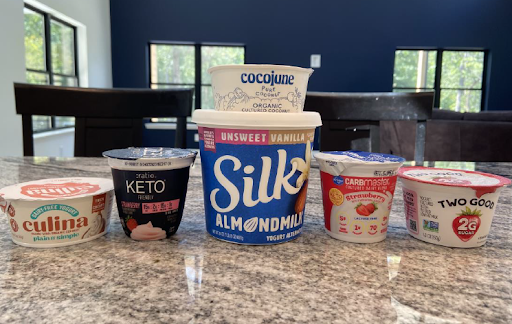
  • Low carb yogurts such as Two Good™, :Ratio Keto, and grocery store brands may be “low carb” (2-4 grams net carbs per serving), but you may need to add more fat by mixing in oil, unsweetened coconut flakes or heavy cream. 

    • For example, by mixing 1 container of Two Good™ Yogurt with 1 tablespoon of coconut oil you can increase the fat content from 2 grams in the yogurt alone to 16 grams which will help create a 1:1 overall ketogenic ratio of fat to carbs and protein. 

  • Other great add-ins for those on less restrictive forms of keto therapy include low carb cereals, granola or chocolate.

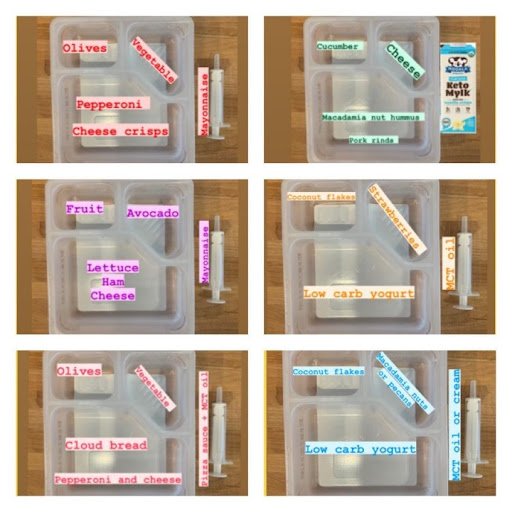
Meal 4: Bento Boxes

  • Bento boxes are an opportunity to create several different combinations of foods that will work for your keto student! They also allow you to get creative with a fun container that kids can decorate with markers or stickers to make it just their own! 

  • Keep in mind that sending fat in a small container or syringe might make transportation easier. 

    • Example combinations: 

      • Low carb fruit (berries), avocado, lettuce, ham, cheese with mayonnaise in a syringe

      • Olives, cloud bread, low carb vegetables, pepperoni and cheese with mayonnaise and pizza sauce in a syringe 

      • Low carb yogurt, unsweetened coconut flakes, strawberries and MCT oil in a syringe 

Product Highlights:

The Cloud Bread Company™ makes Cloudies™ out of egg and offers 3 different flavors including original, garlic herb and cheddar. Each piece has 30-35 calories, 0-1 grams of net carbs, 3 grams of fat and 1-2 grams of protein.

Disclaimer: This blog is not intended to be medical advice. Please consult with your ketogenic diet team to evaluate if these ideas are appropriate for your unique needs. This blog post is NOT sponsored. Availability or products at retailers is subject to change.