How and Why to Check Blood Ketones For your Child with Epilepsy

By: Jessica Ernst MS, RD, CSP, LD

If your child is on a medical ketogenic diet for epilepsy, your dietitian or doctor will most often ask at appointment visits: “What are your child’s ketone levels”? Blood ketones (or beta-hydroxybutyrate) is the most abundant ketone circulating in the blood and can provide real time information on whether your child is in ketosis. When a child is on a medical ketogenic diet, ketones may provide important information regarding your child’s keto ratio in relation to seizure control. 

Here are some reasons why blood ketones are important to measure:

  • When starting a ketogenic diet, blood ketone measurements can provide information on when your child is transitioning into ketosis.

  • Once on the diet:

  • If your child is still having seizures or an increase in seizures, the blood ketone level could provide information needed for the dietitian to adjust the diet ratio.

  • If your child has breakthrough seizures due to illness, which can cause ketone levels to be lower, your dietitian may temporarily increase the ratio.

  • It is normal for ketones to be lower in the morning, therefore if you notice that ketones are low in the morning but higher in the afternoon, your dietitian may suggest adding some MCT oil or a fat bomb to your child’s diet before bedtime. 

  • Blood ketone levels can also tell your medical team if your child's ketone level is too high and his/her ratio needs decreased or adjusted to prevent short term and long-term side effects of excessive ketosis.

Your dietitian will provide your child’s unique blood ketone goal. And with these blood ketone numbers, your child’s medical team can determine if a change in ratio or calories in the diet is needed to achieve seizure freedom!


How to get your kid to test without a fuss?

Finger pokes for a child and the parent can be tough at first. No one likes to have a needle pierce the skin, but there are ways to improve the experience of the finger prick!

Here are some ways to make the process go more smoothly:

  1. Be ready with all the supplies before you take the measurement so it can be quick and easy. 

    a. Supplies: lancet, lancing device, glucose-ketone meter, alcohol prep pad, Band-Aid, ketone strip

  2. Test on different fingers or toes to not cause discomfort from testing in the same spot every day. If needed, you could ice the spot to numb it a bit, but most kids don’t require it to be numb. You will be surprised how tough these kids can be!

  3. If age and developmentally appropriate, it is helpful if your child understands the importance of measuring ketones and can even make a fun game out of the poke. Teach your child that checking ketones keeps their body healthy and safe. Ketones are a superpower!

  4. Use distraction! Blowing bubbles, giving your child a colorful Band-Aid, or offering a bright colored sticker may make the process a tad bit easier. Invite participation from your child so they can be involved in the process. 

  5. If your child expresses emotions such as fear regarding the poke, acknowledge the feelings, praise them for their bravery, and provide a non-food reward.  

What do these results mean?

Monitoring blood ketones for trends can help guide your dietitian to make the best adjustment of the diet for your child. It is important to note that every child is different and may require a higher or lower goal blood ketone measurement for optimal seizure control. Speak with your child’s dietitian who can provide a ketone goal specific to your child's medical situation. 

Many children on the ketogenic diet for epilepsy require a very stable ketone measurement throughout the day without fluctuations to maintain ideal seizure control. However, every child is different, which is why checking ketones at home may provide useful information for your child’s care team. Checking blood ketones at the same time each day may provide insight for consistency, so discuss the best time to check blood ketones for your child with your child’s dietitian.

With new technology, information can be shared in between appointments to the doctor or dietitian to make an informed decision regarding your child’s ketogenic diet prescription. 

Where can I get more information on how to test my child’s blood ketones?

The Keto-Mojo website provides How-To videos with easy-to-follow steps on obtaining a great blood sample. The Keto-Mojo glucose-ketone meter can be synced through Bluetooth with a free app to track and monitor your child’s blood ketone levels. You can also share this information with your medical team through the MyMojoHealth platform. Knowing your child’s ketone level is a powerful tool to guide adjustments to the ketogenic diet. 

The Keto-Mojo meter is not currently covered by insurance. However, in most cases, you can purchase a meter and strips using your Flexible Spending Account (FSA) or Health Savings Account (HSA). You do not need a prescription to purchase the Keto-Mojo glucose-ketone meter, but in some cases, your HSA or FSA provider may require a detailed invoice for reimbursement. You can read more information about reimbursement here.

With the right tools, like your Keto-Mojo meter, it can be easy and quick to get these measurements! Click here for a 15% off discount on your new meter!*

Jessica is a Registered Dietitian Nutritionist, specializing in using food as medicine with the ketogenic diet for children and adults with various medical conditions. In her role as Clinical Educator for Keto-Mojo, Jessica works with health care professionals to help them understand the benefits of ketogenic therapies, the value of glucose and ketone testing for monitoring and compliance, and the ways they can integrate real-time patient data using the MyMojoHealth platform to improve health outcomes for their patients.

Refer back to this blog post for more information on the differences between urine, breath and blood ketones as well as one ketogenic dietitian's opinion and perspective on when to use each method and how often to check.

*The 15% discount applies to the Promo Bundle or Basic Starter meter kits. The discount does not apply to test strips or other accessories. You will need to select “Checkout” before the discounted price will appear. The discount will not be visible if only “Add to Cart” is selected.


Trick-Or-Treat: Halloween Keto Style

Recipe and Content Contributor: Taylor Parrish, RDN, CLC, LD

Halloween is just around the corner! The stores have an abundance of all things Halloween (candy, costumes, treats, props, etc.) tempting our little keto warriors. Holidays can be a time of mixed emotions for keto kiddos because they see so many things they cannot have on their ketogenic diet. 

However, there are still some great alternatives, so your child does not have to go without. There can be treats, there can be candy, and there can be fun Halloween-type activities. Our hope is that these recipes help make Halloween and Fall time more enjoyable for your epilepsy warrior. 


To get started, check out some of these great Halloween themed equipment: 


Recipe 1: Charlie Foundation Blueberry Macadamia Nut Waffles using the spider web Dash waffle maker

Ingredients

• 50 g raw egg, mixed well

• 21 g macadamia nuts, ground into butter

• 8 g coconut oil, melted

• 20 g frozen blueberries, unsweetened

• optional: 3 drops liquid stevia, a pinch of salt


Directions

Pre-heat a waffle iron or non-stick pan. Combine the egg, macadamia nuts and coconut oil, stir until very well combined. Add the frozen blueberries and optional ingredients to the macadamia nut batter. Stir to evenly distribute the blueberries. Pour the batter into a waffle iron, filling each mold about 3⁄4 of the way full. For pancakes, use a tablespoon to pour small pancakes onto a non-stick pan. Make sure to scrape all the batter out of the mixing bowl! For waffles, cook until the steam begins to slow down, ignore any indication lights or alarms! For pancakes, cook the first side until the edges begin to look dry, flip and cook the second side until cooked through and slightly browned. Top with fresh blueberries and butter to meet your child’s ratio (for a 2.5:1 ratio, add 32 g fresh blueberries and 1 T (14 g) butter on top). Serve immediately or freeze in plastic wrap.

Check out these other great Halloween recipes from the Charlie Foundation: 

Pumpkin Spice Fat Bomb

Gelatin Gummies

Chocolate Candy

Peanut Butter Cups


Recipe 2: Super Easy Pumpkin Seed Snack 

Ingredients:

• 130 grams (1 cup) pumpkin seeds

• 25 grams (2 Tablespoons) coconut oil


Directions:

Preheat the oven to 325F. Wash seeds in colander, don’t worry if there are a bit of “pumpkin guts” still on the seeds. Dry seeds and place on pan. Melt coconut oil in microwave for 45 seconds. Pour oil over seeds, add salt, stir, and pop in the oven. Cook for 25 minutes, stirring once. Divide this into 4 servings.


Nutrition Information (per serving): 250 calories, 1.5 grams net carbs, 22 grams fat, 9 grams protein (2:1 ketogenic ratio) 


Recipe 3: Ghost Tortilla Chips by KetoCook

Ingredients:

• 1/2 low carb tortilla (Mission whole wheat carb balance)

• 2 T olive oil

• pinch sea salt


Directions:

Cut tortilla into shape of choice (ghost, pumpkin, etc.). drizzle with olive oil and mix well to coat the

tortilla. Sprinkle with sea salt. Line parchment paper on baking sheet and payout the tortilla

without overlapping. Bake in oven at 320°F for 8 minutes (or until crisp).


**Can serve with keto cheese sauce (cheddar cheese, cream, and butter), guacamole/avocado or with

hummus dip (Haig’s Baba Ghannouge brand is very low in carbs and you can add extra olive oil for more fat). 


For some other great Halloween recipes from KetoCook check these out:
Pumpkin Cheesecake Bars

Silly Monster Face

Recipe 4: Spooky Pesto 

Ingredients:

• 1⁄2 cup cooked spaghetti squash

• 1/4 cup Classico pesto sauce

• 1 Tablespoon olive oil

• 1 oz mozzarella cheese (cut from a “log” or use the mozzarella balls)

• 2 black olive slices

• 1 red pepper slice


Directions:

Combine pesto and olive oil. Stir into cooked spaghetti squash. Add mozzarella and olives to make eyes. Add pepper slice for nose. 


Nutrition information (per serving): 465 calories, 8 grams net carbs, 9.5 grams protein, 42 grams fat (2.4:1 ketogenic ratio) 


Fat Bomb & Candy Recipes: 

Pumpkin Spice Cream Cheese Ghost 

Ingredients:

• 8 oz cream cheese, full fat, softened

• 1⁄2 c butter, salted, softened

• 1 c MCT oil powder

• 1 cup Lakanto Powdered Monkfruit sweetener

• 84 Lily’s Chocolate Chips

• 1 tsp ground cinnamon

• 1⁄2 tsp ground ginger

• 1⁄4 tsp ground cloves

• 1⁄4 tsp ground nutmeg


Directions:

Using an electric mixer, mix cream cheese, butter, MCT oil powder and monkfruit sweetener on low-medium speed until well combined and no clumps remain. Using a spatula or wooden spoon, blend spices into cream cheese mixture. Add mixture to a piping bag with a circular wide nozzle (or put in a plastic baggie and cut the edge). Use piping bag to create ghosts. Reserve 3 chocolate chips for eyes and nose on each ghost. Chill for 30 minutes and serve. This recipe makes 28 ghosts (~23 grams each). May store in refrigerator for up to 3 days.


Nutrition information (per ghost): 100 calories, 0.5 grams net carbs, 10 grams fat, 1 gram protein (6.7:1 ketogenic ratio) 


Peanut Butter Fat Bomb 

Ingredients:

• 1/2 cup (108 g) coconut oil (melted)

• 3/4 cup (192 g) Skippy NSA PB

• 1/4 tsp. sea salt

• 1 tsp (4 g) vanilla extract

• 3 - 4 drops liquid stevia

• Chocolate Ganache

• 1 T (5 g) cocoa powder

• 6 T (84 g) coconut oil

• 1 - 2 drops liquid stevia


Directions:

In a small bowl, mix the coconut oil, peanut butter, salt, vanilla extract, and liquid stevia (or another

no-calorie sweetener). Whisk until smooth and creamy. Line a 6-muffin tray with muffin paper cups. Spoon about 3 tablespoons of the peanut butter mixture into each cup. Place in the refrigerator for at least 1 hour, or overnight, to set. While the peanut butter layer is chilling, whisk together the ganache ingredients until silky smooth. Spoon about 1 tablespoon of chocolate ganache on top of each fat bomb.

Chill for at least 30 minutes in the refrigerator before serving.


Nutrition Information (per fat bomb): 271 kcals, 2.2 grams net carbs, 27.5 grams fat, 3.6 grams protein (4.7:1 ketogenic ratio) 


Pumpkin Pie Patties 

Ingredients:

• 2 1⁄2 cups unsweetened shredded coconut

• 1⁄2 cup coconut oil

• 25 drops stevia (such as Sweet Leaf)

• pinch to 1⁄4 teaspoon salt

• 3⁄4 cup pumpkin puree, unsweetened

• 1 tablespoon ground cinnamon

• 1 1⁄2 teaspoons ground ginger

• 1⁄4 teaspoon

• pinch ground cloves


Directions:

Line a baking sheet with two 12-count mini muffin silicon molds. Set aside. Add shredded coconut, coconut oil, stevia, and salt to the bowl of your food processor. Process on high for 5-8 minutes until drippy. You may have to remove the lid a couple of times and scrape the chunky bits from the side of the bowl. Once smooth, remove 1⁄4 cup of the coconut mixture, leaving the remaining coconut mix in the food processor bowl. Add remaining ingredients and process until smooth again. If you use cold pumpkin puree, the coconut will harden. No worries - just process until smooth again. The texture of the pumpkin mixture will be like apple sauce. Divide the pumpkin mixture into the muffin cups. Press down with fingers or the back of a spoon until completely flat. Then, top with reserved white coconut mixture. Transfer baking sheet to the freezer and freeze for 1 hour. Serve!


Nutrition Information (each mini muffin cup): 187 calories, 2.3 grams net carbs, 19 grams fat, 1.3 grams protein (5.25:1 ketogenic ratio)


Chocolate Coconut Candy 


Candies

• 1⁄2 cup coconut butter

• 1⁄2 cup coconut oil

• 1⁄2 cup unsweetened shredded coconut

• 3 T powdered Swerve (does contain sugar alcohols)

Chocolate Topping

• 1 1⁄2 oz cocoa butter

• 1 oz unsweetened chocolate

• 1⁄4 cup Swerve

• 1⁄4 cup cocoa powder

• 1⁄4 tsp vanilla


Directions:

Line a mini muffin pan with 20 mini paper liners. Combine coconut butter and coconut oil in a small saucepan over low heat. Stir until melted, then mix in the shredded coconut and sweetener. Divide mixture between muffin cups and freeze until firm, about 30 minutes. For the chocolate coating, combine cocoa butter and unsweetened chocolate in a bowl and set over a pan of simmering water (or use a double boiler). Stir until melted. Stir in powdered sweetener, cocoa powder, and vanilla. Spoon chocolate over the chilled coconut candies and let set, about 15 minutes.


Nutrition Information (per 2 candies): 166 calories, 2.5 grams net carbs (subtracting 90% of carb from erythritol), 17 grams fat, 1 gram protein (4.9:1 ketogenic ratio)


Chocolate Peanut Butter Candies 

Chocolate Coating

• 1⁄4 cup butter

• 3 oz unsweetened chocolate

• 2 T powdered Swerve

• 2 T cocoa powder

• 1⁄2 tsp vanilla

• 12 drops stevia extract

Peanut Butter Filling

• 1⁄2 cup creamy natural peanut butter

• 3 T powdered Swerve

• 1⁄2 tsp vanilla


Directions:

Combine butter, unsweetened chocolate, and powdered Swerve in a small saucepan over low heat.

Stir until melted, then mix in the cocoa powder, vanilla, and stevia. Let cool 5-10 minutes until

somewhat thickened. Use the back of a small spoon to spread 3⁄4 of the chocolate mixture (reserving the rest for later) on the bottom and up the sides of twelve 1 1⁄2-inch silicone candy molds. Freeze until firm, about 20 minutes. Divide mixture between muffin cups and freeze until firm, about 30 minutes. In a microwave safe bowl, warm peanut butter for about 30 seconds at 50% powder until melted

but not hot. Stir in vanilla and powdered Swerve. Remove chocolate cups from the freezer and fill almost to the top with peanut butter mixture, leaving a little room on top for the remaining chocolate. Return to freezer for another 10 minutes until firm. Rewarm remaining chocolate and spoon over the peanut butter filling. Freeze again until set, about 20 minutes.


Nutrition Information (per 1 candy): 138 calories, 3 g net carb (subtracting 90% of carb from erythritol), 13.5 grams fat, 3.8 grams protein (2:1 ketogenic ratio) 


We hope these recipes make your keto kiddos Halloween and fall season a little bit tastier! Please share your tips and tricks for thriving during the Halloween season when navigating a ketogenic diet. 


Lunch Box Inspiration: Keto Style

By: Stephanie Borst, MS, RD, LDN

It’s the start of a new school year! Are you in need of new lunch ideas? The following ideas are meant to give you inspiration that can be modified to fit your specific diet variation whether you are following classic keto, modified keto, modifed Atkins or low glycemic (or anywhere in between). Several convenient and pre-packaged products are mentioned to make life a little easier and less hectic as the family is rushing out the door in the mornings!

Meal 1: Wraps 

• Choose a variety of lunch meats, cheeses, olives, and/or pickles. Then form into a wrap using a lettuce leaf, egg wrap or cheese wrap. Another option would be to skip the wrap and grab a skewer to make a kabob! 

• Don’t forget the fat! Pack a side of mayonnaise, avocado, ranch mixed with mayonnaise or ranch mixed with oil as a dipping sauce.

• Add your favorite low carb side! 

Product Highlights:

Check out Egglife® Egg Wraps which are made from 95% egg whites from cage free eggs; not flour. They have 5 different flavors to choose from – original, southwest style, Italian style, everything bagel and sweet cinnamon. Each wrap has 0 to 1 gram of net carbs, 5 to 6 grams of protein and 30 to 35 calories. They do not contain any fat so you will need to be sure to pair with a fat source.

Another great wrap option would be Cheese Wraps from Crystal Farms which come in mozzarella and marble jack flavors.  Each slice contains 90-110 calories, 6-9 grams fat, 0-1 grams of net carbs and 7-8 grams of protein. Folios® Cheese Wraps™ are another option and contain 135- 180 calories, 10-13 grams fat, 1 gram net carbs and 11-13 grams protein depending on the flavor. 

Meal 2: Pizza

  • Make mini pizzas with cheese crisps or pepperoni slices as your crust. Then add a little bit of sauce and top with cheese, sausage and/or pepperoni. 

  • Don’t forget to drizzle the little pizzas with oil to boost the fat content. 

Product Highlight:

Whisps® Cheese Crisps come in a variety of flavors and are great for snacking but the Parmesan option is great for creating bite sized pizzas. 23 crisps contain 150 calories, 10 grams fat, 1 gram net carbs and 13 grams protein. They are available on Amazon and in many grocery store chains.

Meal 3: Yogurt

  • Make your own yogurt parfait for a quick breakfast or easy snack idea. 

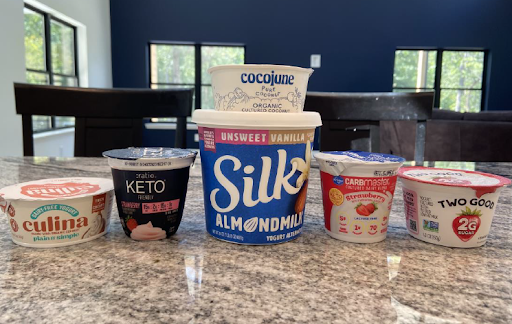
  • Portions sizes of yogurt and add in options will vary based on your carbohydrate allowance per day. Keep in mind that not all yogurts marketed as “keto” or “low carb” are appropriate for a medical ketogenic diet. 

  • Low carb yogurts such as Two Good™, :Ratio Keto, and grocery store brands may be “low carb” (2-4 grams net carbs per serving), but you may need to add more fat by mixing in oil, unsweetened coconut flakes or heavy cream. 

    • For example, by mixing 1 container of Two Good™ Yogurt with 1 tablespoon of coconut oil you can increase the fat content from 2 grams in the yogurt alone to 16 grams which will help create a 1:1 overall ketogenic ratio of fat to carbs and protein. 

  • Other great add-ins for those on less restrictive forms of keto therapy include low carb cereals, granola or chocolate.

Meal 4: Bento Boxes

  • Bento boxes are an opportunity to create several different combinations of foods that will work for your keto student! They also allow you to get creative with a fun container that kids can decorate with markers or stickers to make it just their own! 

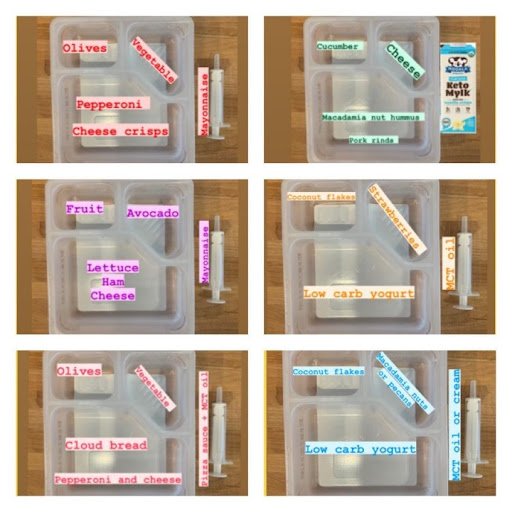
  • Keep in mind that sending fat in a small container or syringe might make transportation easier. 

    • Example combinations: 

      • Low carb fruit (berries), avocado, lettuce, ham, cheese with mayonnaise in a syringe

      • Olives, cloud bread, low carb vegetables, pepperoni and cheese with mayonnaise and pizza sauce in a syringe 

      • Low carb yogurt, unsweetened coconut flakes, strawberries and MCT oil in a syringe 

Product Highlights:

The Cloud Bread Company™ makes Cloudies™ out of egg and offers 3 different flavors including original, garlic herb and cheddar. Each piece has 30-35 calories, 0-1 grams of net carbs, 3 grams of fat and 1-2 grams of protein.

Disclaimer: This blog is not intended to be medical advice. Please consult with your ketogenic diet team to evaluate if these ideas are appropriate for your unique needs. This blog post is NOT sponsored. Availability or products at retailers is subject to change.

Keto Super Stars: Meet Fuad

By: Keto Mom Tito

What was your main reason for pursuing the ketogenic diet?

Our son was diagnosed with periventricular grey matter heterotopia at the age of 2. A friend told us about the ketogenic diet for seizures and after doing some research, we decided to try it and see if it would work for him. At the age of 3, he was put on the Modified Atkins Diet (MAD) as it is more flexible than the “classic” ketogenic diet. We initially started with a carbohydrate restriction of 20 grams a day, but he is now on 50 grams of carbs a day and still maintaining good seizure control. We check his ketones every morning and before bed to assure he is in ketosis. 

What other treatments have you tried and stopped in the past?

Initially after his diagnosis, he was put on Keppra (levetiracetam) to help manage the seizures. Unfortunately, this medication led to irritability and fatigue. The seizures also got progressively worse over time increasing from monthly to every two weeks. We did not want to keep adding medications to manage his condition so seven months after his diagnosis and after trying and failing Keppra, the MAD was started. 

What are some of the difficulties you encounter with the ketogenic diet and how have you been overcoming them? 

In the beginning, finding recipes he would enjoy was very difficult. It was mostly a matter or trial and error. Also sticking to the extremely low level of carbs allowed daily was a challenge but over the years, we have been able to create multiple meals that are our go to while also trying to create new meals and snacks to try. Our go-to- meals include keto pancakes and turkey sausage, Two Good™ yogurt with berries, and fathead dough pizza crust which is made with cheese, cream cheese, egg and some type of low carb flour.  Kitchen staples in our lives include measuring spoons, cups, spatulas and lots of mixing bowls. 

What has been the best thing you have seen as a result of the ketogenic diet?

The seizures stopped right away, and he has not had a seizure episode for almost 3 years now. He is thriving and is back to being the curious, fun-loving boy dad and I love. 

What do you wish you had known at the beginning that you know now?

I have to say that the Ketogenic clinic team at University of Chicago Hospital is a godsend. The team was with us every step of the way from the beginning. My questions were always answered promptly and thoroughly. I cannot thank his dietitian Stephanie Schimpf enough, she made the whole process bearable for us because she was always there to encourage us, provide ideas with his meals and was there for us as needed. 

What is a piece of advice that you would give to families who are thinking about starting the diet or who have just started?

My advice for families who are thinking about it and those who have started would be to please give this diet a shot. It is very challenging, but the rewards are immeasurable. Our son has a chance at a great quality of life because of this diet.

Before you Begin…

By: Keto Mom Melanie

I used to think I knew about the ketogenic diet. I focused on not eating carbs and finding fat bomb recipes. Then Dravet Syndrome, a type of genetic epilepsy that begins in early life characterized by temperature-sensitive/febrile seizures and often treatment resistant, entered the picture. I realized I had only dipped my toes into the shallow end. My husband, Joe, introduced me to the ketogenic diet with a version he follows for weight management. He adopted a ketogenic lifestyle over 10 years ago but before embarking on his lifestyle change, he did some digging. After learning about the history of the ketogenic diet, it was important for him to understand the mechanism of the diet. He discovered that a more precise version of the ketogenic diet is used to help control seizures, particularly in people with drug resistant epilepsy. Joe is the reason we advocated for Ketogenic Diet Therapy, or KDT, for our daughter. As I dove in, it hit me-this should be documented! So here I am... My daughter, Rosie, started KDT in September 2021. We waited 3 months for the appointment. I was at an advantage because Rosie had just started eating and was transitioning off formula. That weighed heavily on me. I tried to wrap my head around what it would be like going into KDT without any of the information I had already learned about ketogenic diets. Or trying to convince a toddler that their diet had to change overnight. That just seemed so unfair. So, before you start using all the math you thought you would never need, I have put together some modifications you might consider before your KDT appointment.

  • Switch from dairy milk to unsweetened coconut, almond, or other nut-based milk. If your child is not loving the taste, try a few brands because there seems to be a significant taste difference between brands. Also, consider that unsweetened vanilla flavors are often allowed on ketogenic diets. If after trying different brands, your child still does not like the taste, try adding a pump of sugar-free flavor syrup (I have found the sugar-free syrups at TJ Max for under $5) and/or a squirt of zero sugar whipped cream. With so many flavors, your child may find a few favorites. Coconut milk has more fat than almond milk and is around a 3:1 ratio depending on the brand, which means you do not have to add extra fat to be KDT compliant. However almond milk can easily be altered to be higher in fat by adding some heavy cream to it. Try adding 1 Tablespoon of heavy cream to 8 ounces of almond milk to increase the fat by about 5 grams and get you to a 4:1 ratio. Redi-Whip, Great Value, and Land O Lakes brands both have sugar-free versions.

  • Start making sandwiches on low-carb tortillas. Choose the option with the lowest net carbohydrates. I stock up when they are BOGO at the grocery store. La Banderita brand, street taco size, is an excellent option with 0 net carbs. Mission Tortilla Carb Balance, La Tortilla, and Lavash all offer low-carb options as well.

  • Select sugar-free versions of all beverages. This is important. You will want to know what your child will enjoy drinking. Hydration is a critical part of KDT. Minute Maid has 4 zero sugar flavors: fruit punch, mango passion, lemonade, and pink lemonade. Some other options are Mio flavoring drops, Powerade Zero, Propel Fitness Water, Hint Water, and ICE Sparkling water. Many carbohydrate-free beverages are available but always double-check the nutrition label to assure that it reads 0 grams of carbohydrate per serving. Please note that these products may be sweetened with artificial sweeteners such as sucralose, aspartame, and erythritol. Tolerance to these ingredients may vary so please use with caution and in moderation. 

  • Add a few avocado slices at mealtime or snack time. Avocados are an amazing source of high-quality fat. I keep single-serve guacamole or plain mashed avocado on hand. It is easy for a grab-and-go snack, plus you can find frozen avocado chunks at some grocery stores which is a wonderful way to prevent food waste-we have all seen how quickly fresh avocados can go bad. 

  • Substitute zucchini noodles, shirataki noodles, or spaghetti squash for pasta. If your kiddo loves pasta, as most kids do, the shirataki noodles are a good substitute. They work in everything from spaghetti with tomato sauce to macaroni and cheese. Rinse them off and toss them in a frying pan to “dry” them a bit.

  • Update your scrambled egg recipe by adding 2-3 tablespoons of zero carb-heavy cream per egg or cook them in 1-2 tablespoons of butter. Trust me, I know! It seems like a lot of fat because it is! Make sure the nutrition label shows 0 carbs, not <1. Trace amounts of carbs add up! Natural by Nature, Organic Valley, Clover, Sonoma, Stonyfield Organic, and Publix Heavy Whipping Cream (label below) are brands that are 0 carbs.

  • For snacks, be creative. Are cheese and crackers a go-to? Try swapping the cracker for cucumber slices. Are chips and pretzels a favorite? Introduce pork rinds. A great base for a dip is sour cream and mayo. Add in your fresh or dried herbs and you have a delicious KDT compliant treat. 

My goal is to make this manageable for your family. When you slowly incorporate some of these modifications before your official start date, you will be much more ready to dive into Ketogenic Diet Therapy under the guidance of your medical team. Good luck!

Keto Super Stars: Meet Charlotte

By: Ashley Oldaker (Keto Super Mom)

While we have just begun our Keto journey earlier this year, our journey to get here has been a little longer. Our daughter, Charlotte (5), had her first tonic-clonic seizure at 9 months old. We rushed her to the ER where they ran tests on her and everything came back fine. A few months later she had her second tonic-clonic seizure and we again took her into the ER. This time around we were referred to a pediatric neurologist at our Children’s Hospital, here she was diagnosed with generalized epilepsy.

We weren’t fully convinced it was just generalized epilepsy, we started to compare the two, thinking it was maybe tied to being sick/on medication or something to do with food. When we looked back at the first one, she was getting over croup, this time she was getting over an ear infection. We also realized both happened right before mealtimes. We thought we were onto something, but then a few months later she had her third tonic-clonic seizure. This time she wasn’t getting over an illness or on medication, however it was right before breakfast. We were convinced these seizures were tied to when/what she was eating. Since this seizure didn’t fully present itself like the other two, we decided it was time to put Charlotte on an anti-seizure medication, so at around 15 months old she was on Keppra with regular follow up appointments with her pediatric neurologist. 

The Keppra was working, we didn’t see any more tonic-clonic seizures, however Charlotte would have these odd episodes where she would say she was dizzy and was clearly out of it. We would give her a little juice or some fruit snacks, or she would take a 15 minute nap and she would perk up. We brought this up at each of our follow up appointments with her neurologist. We would either run more tests, or up her Keppra. After upping her Keppra, Charlotte would be good for a couple of weeks and then these dizzy spells would come back. During this time, we also noticed Charlotte was developmentally behind on her milestones. We were starting to wonder if she was just doing things on her own time/terms or if the medicine was causing issues. 

Throughout the years of regular pediatric appointments and routine follow ups with her neurologist we had MRI’s, EEG’s and bloodwork done. Each time, everything would come back normal. This was great news, but also frustrating to us because we knew something else was going on. She shouldn’t be having these dizzy spells as often as she was. During her routine follow up with her neurologist in November of 2021, we went back to the drawing board and started from the beginning. At this time, we decided to do some genetic testing. We were hopeful, but scared about the can of worms we could be opening with doing this testing. In December we got a call from her doctor, she had good news for us, we finally know why Charlotte is having seizures and her little episodes, and she was diagnosed with Glut1 Deficiency. 

Glut1 Deficiency is a rare genetic disorder that impairs brain metabolism. Essentially, Charlotte’s brain isn’t able to process glucose properly which prevents it from growing, developing and functioning as it should. With a diagnosis, we finally had answers, and we could get her on the right treatment plan. Currently, there is no cure for Glut1, however, a medically supervised Keto diet can help improve most symptoms. What is Glut1 Deficiency?

Right before Charlotte’s 5th birthday, we decided to start the Keto diet, under the guidance of her new Keto team, we started the diet from home and eased her into it. The first week, we swapped out one meal to be a keto meal. The second week, we did two meals as keto. The third week, all three meals were keto, but her snacks were still regular. Finally the fourth week we were full blown keto. To be honest, we were very overwhelmed and scared during this transition. We were worried she was going to want her usual snacks and meal options of chicken nuggets, goldfish crackers, yogurt, etc. We tried to explain to her the best that we could, that she would need to go on this special diet to help her brain and body grow and feel better, she wouldn’t be able to eat some things she used to anymore. At first it was a little bit of a struggle, but by the time we were full blown Keto, she was realizing she can still eat a lot of food she likes, but things have to be made special just for her. She thinks she is pretty cool because at school she has her own special tray with her own food. 

We are only on our fourth month of being on the ketogenic diet, but so far it seems to be working. We did have one trip to the ER during the transition, but other than that we have seen improvements with Charlotte. We aren’t getting calls weekly from school about her having dizzy episodes or seizures, she has more energy, and she is doing better in school. We are still pretty new to this, but it isn’t as overwhelming as it once was and I know as we continue on it will become second nature. Charlotte has been a rock star during this, she doesn’t ask for sugary treats, and knows she can’t just eat anything she wants. She loves to help me make her breakfast every morning (she will even correct me if I miss something), and enjoys making her snacks as well. Her little sister recently tried to give her a Cheerio and Charlotte told her “no thank you, I can’t have that, it isn’t on my diet.” It can be heartbreaking to hear your five year old say, “I’m on a diet,” since the word “diet” is traditionally thought of negatively, but it makes my momma heart proud. She is aware that the keto diet makes her body feel better and it is helping her not have seizures, and what other diet allows you to lick the butter clean off your plate? ;)

Keto Super Stars: Meet the Lewis Family

By: Laura Lewis (aka Super Mom)

In April of 2019, my daughter Stella was found unresponsive in her crib at the age of 2 years old. She was completely stiff. After an ambulance ride and an ER visit to the children's hospital, we were told that she had a febrile seizure. Months later, in August, September, and October it happened again. After the seizure in October, she was diagnosed with epilepsy and put on Keppra. Within 3 days she stopped being able to walk properly…this is where our journey began. Over the next 2 years we did every genetic test, MRIs, countless EEGs with no answer as to why Stella was having seizures. We tried 9 different medications and cannabidiol (CBD). Stella officially was diagnosed with intractable epilepsy. We asked 3 different neurologists about the ketogenic diet and were told that her situation was not severe enough and it would not help her, until we met Dr Koh. We began our keto journey in January of 2022.

What was your main reason for pursuing the ketogenic diet?

After 9 failed medications for various reasons (side effects, increased seizures, etc), we were told that Stella would be a candidate for the modified Atkins diet (MAD). We were referred to the ketogenic diet clinic at Children’s Healthcare of Atlanta (CHOA) and met with the physician and dieticians. 


What other treatments have you tried and stopped in the past?

Stella has been on the following medications in various combinations and dosages to attempt to control her seizures. 

  • Keppra

  • Trileptal

  • Klonopin

  • Zonegran

  • Vimpat

  • Depakote

  • Cannabidiol (CBD) 


What is Stella’s ketogenic diet prescription?  

We aim for 150 grams of fat a day and no more than 35 grams of net carbs. Stella averages between 1500-2000 calories/day. 


What is a typical day of eating for Stella on her ketogenic diet plan? 

 She loves the Birch Bender Keto Toaster Waffles so she usually starts with those and some bacon. I also give her berries and add heavy whipping cream.  

Lunch can be her keto pizza, keto ratio yogurt with some MCT oil added in, cucumbers and mayo and then some berries. She loves fruit - it’s her favorite thing so I usually give her around 10 raspberries or blackberries. 

Dinner is usually whatever we eat with a lot of added butter, or I order from Factor 75 because they have keto meals and it’s so easy. Everything is grass fed, no preservatives, no refined sugar and she loves them. She 


What are some of Stella’s favorite ketogenic meals/foods? 

 Stella loves a keto pizza! I get the cauliflower pizza crusts from Trader Joe’s, put butter on it, add 2 tablespoons of Rao’s Marinara Sauce, loads of full-fat mozzarella cheese, pepperoni and bacon on it and bake it. It’s a total of 4 grams net carbs and she feels like she is eating pizza. 

She has always been a good eater and has always loved veggies and “dip” so I give her cucumbers with mayo and ranch seasoning. She loves that! Plus to make it easy I buy the Kirkland Signature Guacamole single serve cups and add 1 tbsp of solid butter to it. She eats it right up with a spoon. 

How often do you check ketones and what level of ketosis is Stella in on her ketogenic plan? 

Stella ranges anywhere between small/low ketones (mostly in the morning) to the large/high ketones later in the day. She mostly hovers around the moderate level. 

 We check ketones twice a day now. When we first started we checked a lot more frequently, but since she’s been consistently on the diet and in school, we have reduced the frequency of checks.


What are some of the difficulties you encounter with the ketogenic diet and how have you been overcoming them? 

The most difficult thing for us is that Stella has a little brother who is 2 years old and a super picky eater. She sometimes wants what he has or at school if someone has birthday treats, she wants to be able to have it. Ultimately, the biggest challenge is planning ahead and being prepared before the event arrives. Another challenge was focusing not just on lowering carbs but also dramatically increasing her fat intake. At first, I did not realize that the fat intake was the most important part. 


What has been the best thing you have seen as a result of the ketogenic diet?

After meeting with the doctor and dietitian at CHOA in January, we started the diet in mid-February. The biggest change we are now just starting to see is her cognitive awareness. I had read on many Facebook groups, and so many other places that the diet would change cognition immediately. This was not the case for us. It took us a good 8 weeks until we started to see a difference. Stella was always extremely active. She never wanted to sit down and now she seems a lot calmer and her sleep is better. 


What do you wish you had known at the beginning of your epilepsy journey that you know now?

In the beginning of this whole epilepsy journey, I wish I would have known to fight harder to try the ketogenic diet. I wish I would have challenged the doctor’s opinion and asked to be referred to the keto clinic instead of believing that it would never help. In the beginning of the diet therapy, you may see an increase in seizures but do not let this discourage you. Keep in mind that it’s important to tweak the diet for your specific person or child. There is no one size fits all!


What is a piece of advice that you would give to families who are thinking about starting the diet or who have just started?

GIVE THE DIET TIME TO WORK! Be prepared that you will be in the kitchen more often and you need to plan. My husband and I were always on the same page about starting her on the diet, but I do not think that we approached it realistically. We were looking for an immediate change and would get frustrated when that was not the case. While she is still seizing periodically, it has only happened while she has been sick, which is typical for epilepsy. 

It's not a one size fits all, some people need to be on a dose of medication and the diet, which for us is the case. She is on a minimal dose of medication, and we feel like we are getting our kiddo back. Give yourself grace while figuring it out. It is a huge adjustment and change of lifestyle so try to be patient and kind with yourself while going through it. If you're willing to give the meds with all the crazy side effects a good try, why not do something that is a more natural route. The effort is worth it. 

If you would like to be featured on our blog and/or social media, please reach out to us at info@ketohope.org! We are always looking for inspiring and amazing stories! 

If you would like to chat with the Lewis family for recipe ideas or support, please contact Laura at Laura.Lewis07@gmail.com or follow her on Instagram @lauralewis07.  Also check out our Family Support page to be paired with a knowledgeable and supportive parent on your ketogenic journey!

Keto Hiking Adventure

by Jen Westbrook

No granola bars? No oatmeal? No baked beans? How can any legitimate backpacker survive without these time-tested staples? With the right amount of preparation, patience, and determination – any hiking trip can become the MAD/Keto hiking adventure of a lifetime. In Spring of 2021, my family of 5, trail name The Wandering Westbrooks, hiked 275 Appalachian Trail miles over 6 weeks. And we maintained 35 grams of net carbs/day.

My son, Roman, had a stroke at birth which damaged his brain. He’s been defying the odds ever since with his

indominable spirit and clever mind. We were told he would not lift his head, talk, or be able to interact with

us on a meaningful level. He’s accomplished all of that, and much more! Living with Cerebral Palsy, Hemiparesis, and Epilepsy have proven challenging, but this family of mine is special. We are not known to sit and accept limitations. Here’s how we prepared and executed, what at first seemed impossible, but turned out to be a wonderful family experience full of exciting memories. (Sans granola bars.)

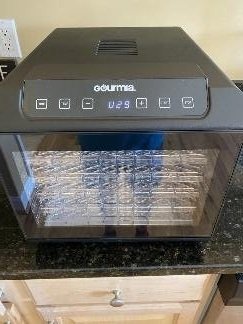
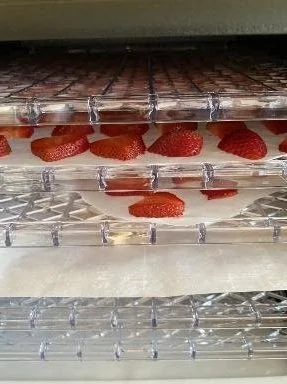
First, the appropriate food prep equipment. Our list includes the Gourmia 5 rack dehydrator, Ziploc bags of various sizes, Wallaby mylar food storage bags, Food Saver BPA free bags, Weston vacuum seal bags, oxidizer packets Food Saver heat sealer, Jetboil, and cardboard boxes (The trail traverses through towns from time to time. We took advantage of the opportunity and mailed ourselves food. We retrieved the boxes at a post office or hostel.)

Next, you need the correct food, in the correct volume. My boys are hungry. They’re adventuresome and full of energy. I knew providing them with enough calories whilst keeping Roman in ketosis would be challenging, but we were undaunted. We planned for 8 weeks on the trail (which was the outer limit of our available time). So, 5 people, 3 meals a day, and snacks for 8 weeks amounts to exactly a bazillion servings. 😊 This was the most tedious part of our preparation. Yes, we portioned out every meal (with all the seasoning), every snack, for every person.

What follows is our list of food (keep in mind all food was carried dehydrated, then rehydrated at mealtime with the exceptions of the bars and nuts/nutbutter pouches). This list includes only our food. I did not include our hiking and camping gear.

(On trail food list) chicken, broccoli, blueberries, strawberries, flax meal, hemp seeds, nutritional yeast,

Keto Cal 3:1, egg powder, heavy cream powder, PB Fit, MCT oil, Fat Bombs, extra virgin olive oil pouches,

Parm Crisp Snack Mix, mixed nuts, pumpkin seeds, beef, spinach, French beans, cheddar cheese, pepper jack cheese, sardines, salmon, anchovies, Good To Go bars, Love Good Fats bars, LMNT electrolyte powder, Justin’s peanut butter or almond butter pouches, Superfats pouches, green bell peppers, jerky, kale. Some meals included Lakanto Monkfruit sweetener, or for a savory flavor we added salt, pepper, garlic powder, or a no carb Jamaican jerk seasoning.

(Off trail food list) About once a week, we would come off the trail and stay at either a hostel or a hotel so we could wash our clothes and bodies and pick up our box of food. On these “zero days” as they are called, we would buy food from a grocery store. Those meals usually consisted of a low carb salad paired with a fatty fish like sardines or salmon, olives, and cheese. Typically, we would also purchase Rebel Ice Cream, which was a nice keto treat after traversing mountains. One food failure: my attempt at making Pemmican. This would have been a great energy packed, no carb food choice if I had some more time to practice making it correctly. Mine fell apart and was more like crumbs. We did not take it along with us.

A typical day of meals looked like this:

Breakfast: flax, PBfit, blueberries, heavy cream powder, Keto Cal, monkfruit.

Lunch: chicken, broccoli, oil (MCT or olive), cheddar cheese or nutritional yeast.

Dinner: Beef, spinach, oil (MCT or olive), cheddar or pepper jack cheese, blueberries or strawberries.

Snacks: Parm Crisp Snack Mix, Super Fat pouch and 2 bars. (Good to Go, Love Good Fats, or Keto Ratio)

Drinks: Water mostly, but on especially hot or humid days and on days the terrain was challenging, or we hiked longer, we would drink no carb LMNT electrolyte mixed in our water.

Supplements: Garden of Life raw vitamin C, Caltrate minis calcium, Pure Encapsulations L-Carnitine, Bio Kult Probiotic.

Planning, portioning, assembling, and mailing all takes time. We began our prep about a month and a half before our trip. Luckily, dehydrated vacuum sealed food lasts a very long time unrefrigerated. As you can see from the pictures, my home became a temporary storing facility for 900 servings of meals, 600 keto bars, 300 Parm Snack Mix servings, and innumerable packets of oil and nut butter pouches. We also pre-counted the supplements and carried only what we needed to save weight. We ate a good amount of food on this trip, and although my children claimed to be “ravenous” at mealtime, they didn’t ask to eat any more than they do at home. Everyone had plentiful energy as after videnced by their antics at our tent sites. After hiking with a heavy pack all day, they still had energy to skip rocks on a stream and climb trees. We even had morning and evening yoga sessions.

Adventuring in the woods whilst dealing with Epilepsy is not without risks, of course. Although we ensured he received ample sleep, adhered to the diet, and kept him healthy, we still took along Roman’s daily and emergency medications to be safe. He , thankfully, was seizure free the entire trip. As hectic as it was to prepare for this trip, food was the easiest part of the whole adventure. Our planning and preparation paid off and I am so grateful my family didn’t skip this experience on account of our special diet. I didn’t even miss the granola bars.

Kitchen Kiddos: Easy Keto Recipes Even Kids Can Master

By: Laura Dority MS RD LD

As the “kitchen manager” in my household, my kids know that most weekends they will find mom busy meal prepping in the kitchen. We are a busy family of 4 with lots of weekly activities- baseball, work, playdates, gymnastics and the list goes on and on. To keep the family functioning smoothly Monday-Friday, I have become a well-oiled meal prepping machine on the weekend.  

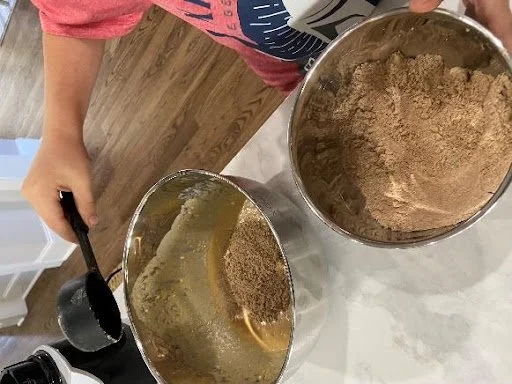
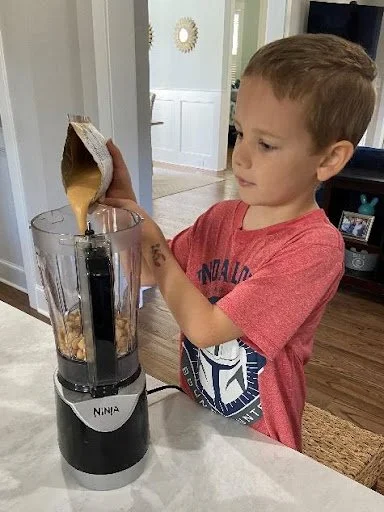
Oftentimes my kiddos want to jump in and help me out in the kitchen…or maybe they are just on the hunt for a fresh cookie…either way they have become my big helpers! This weekend I decided to change it up a bit and focus on 4 keto friendly recipes that my 6-year-old could master almost entirely by himself. I managed anything that involved heat but he did the rest including weighing food on a gram scale, measuring foods using household measures, mixing, blending and of course taste testing. 

Check out these simple keto recipes that we made together and try getting your little keto hero in the kitchen to help!  I have linked to a few of the more unique and harder to find ingredients to make your shopping easier!

Recipe #1: Keto Pancakes

Recipe Credit: Charlie Foundation 

Ingredients: 

•30 grams macadamia nuts- roasted 

•6 grams pecan or macadamia nut oil 

•28 grams egg, raw (mixed well)

Optional: 3 drops vanilla extract

Directions: Grind macadamia nuts in a blender until finely chopped. Mix egg and oil into chopped macadamia nuts and add vanilla extract (if desired). Spray a nonstick skillet with oil-spray and drop batter into desired size circles. Cook until light brown around edges.

Kiddo Tasks: For this recipe, my son weighed all the ingredients, ground the nuts, whisked the egg and handled all the blending. With my supervision, he also successful flipped the pancake (something he was very proud of)! This recipe made about 1 decent size pancake – we went ahead and made a second batch so his little brother could have one too!

Nutrition Information (for entire recipe): 4:1 ketogenic ratio, 300 calories, 30 grams fat, 6 grams protein, 1.5 grams net carbs

Recipe #2: Spice Muffins

Recipe Credit: Functional Formularies® The Keto Recipe Cookbook 

Ingredients: 

1 package (226 grams) Functional Formularies® Keto Formula 

•2 large (100 grams) fresh eggs

•½ cup (114 grams) butter, melted

•1 cup (112 grams) almond flour

•¼ cup (30 grams) coconut flour

•2 teaspoons (8 grams) konjac root flour

•2 tablespoons (12 grams) pumpkin spice blend

•1 teaspoon (4 grams) baking soda 

•Pinch of salt

•Stevia to taste

Directions: Preheat the oven to 300 degrees F. Line a muffin tin with parchment paper liners. Combine the formula, eggs, and melted butter in a large mixing bowl and stir to combine. Sift together the almond flour, coconut flour, konjac root flour, pumpkin spice blend, baking soda and stevia. Add dry ingredients to the wet and stir well to combine. Scrape the sides of the bowl once. Fill each parchment liner halfway and bake for 25-30 minutes until done. 

Kiddo Tasks: For this one, my little dude was responsible for preheating the oven, melting the butter in the microwave in 20-30 second increments and measuring out the ingredients using household measures which turned into a great way for him to understand the difference between teaspoons, tablespoons and different cup sizes. He also helped mix all the ingredients together and spoon the mixture into the muffin tins. 


Nutrition Information (for 1 muffin- recipe makes ~12): 2.4:1 ketogenic ratio, 192 calories, 18 grams fat, 5 grams protein and 2 grams net carbs

Recipe #3: Hummus

Recipe Credit: Functional Formularies® The Keto Recipe Cookbook 

Ingredients: 

•1 clove (3 grams) garlic

•1 cup (132 grams) macadamia nuts, dry roasted

•1 package (226 grams) Functional Formularies® Keto Formula

•1 tablespoon (15 grams) olive oil

•1 tablespoon (15 grams) lemon juice

•2 teaspoons (3 grams) oregano, dried herb

•Salt/pepper

Directions: Using a food processor, add the garlic clove then pulse several times until it is finely chopped. Scrape the sides if needed. Add the remaining ingredients to the garlic. Pulse until the macadamia nuts are pureed. Scrape the hummus into a glass bowl with a tight-fitting lid.  Refrigerate for at least 1 hour before serving. 

Kiddo Tasks: He did this recipe 100% himself. I supervised, checked the weighing, and helped him with some of the scraping but otherwise he is a hummus creating extraordinaire! This recipe makes a pretty good amount of hummus- enough for likely a few days and we paired with cucumbers! 

Nutrition Information (1 serving – recipe makes ~8 servings): 4:1 ketogenic ratio, 214 calories, 21 grams fat, 4 grams protein and 2 grams net carbs

Recipe #4: Keto Chocolate Chip Cookies

Recipe Credit: Charlie Foundation 

Ingredients: 

•1 large (50 grams) egg

•1 tablespoon (7 grams) flaxseed meal

•1 cup (100 grams) almond flour 

•½ teaspoon (2 grams) baking powder

•½ teaspoon (2 grams) baking soda

•¼ cup (30 grams) coconut flour

•1 stick (114 grams) butter, room temperature

•½ cup (56 grams) avocado oil

•2 tablespoons (30 grams) Lily’s semi-sweet chocolate chips

•Sweetener of choice

Directions: In a small bowl, whisk together the egg and flaxseed meal. Set aside. In a food processor, combine the almond flour, coconut flour, baking powder, baking soda and sweetener. Pulse several times to combine the dry ingredients. Add the remaining ingredients, including the chocolate chip. Pulse until well combined. Refrigerate the dough until you can roll into balls and place on a parchment lined baking sheet. Flatten the balls and bake at 350 degrees F for about 9 minutes. Avoid overbaking. 

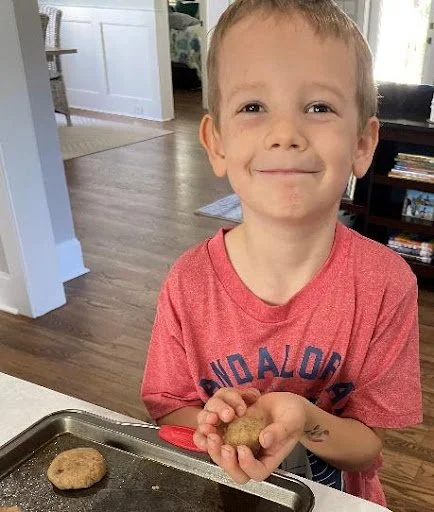
Kiddo Tasks: At this point in our kitchen adventure, whisking, measuring, and mixing were all mastered skills. He also helped roll the dough into balls and really loved flattening them (rather aggressively) with a spoon! This recipe made about 13 cookies and we used a few drops of Stevia as our sweetener. 

Nutrition Information (for entire batch): 3:1 ketogenic ratio, 2193 calories, 214 grams fat, 38 grams protein and 29 grams net carbs

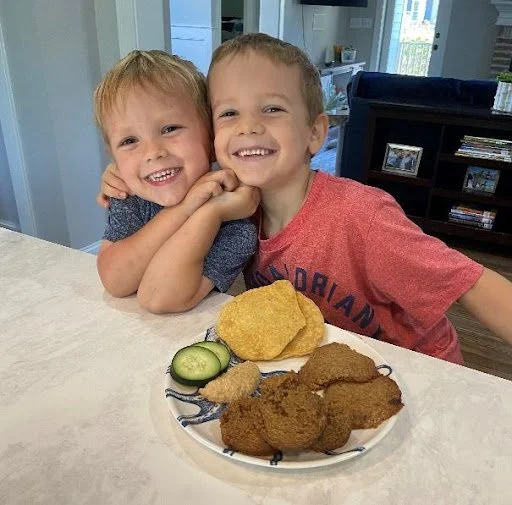
As you can see, little brother joined us for the taste testing part of our kitchen time! I hope you have as much fun as we did making these recipes together! Remember involving your keto kid in the creation of new meals and recipes can help them play a more active role in their keto journey and improve compliance!

Tell us about your favorite easy keto recipe in the comment section so we can continue to expand our options! Oh right, I almost forgot….in terms of the kids helping me clean up…haha…that didn’t happen….that was a mom only step!

Keto Cereals: Kid-Tested, Keto-Dietitian Approved (almost)

By: Sarah Metzger MS, RDN, LD, CDCES

We were all taught that breakfast is the most important meal of the day, and for many Americans, cereals are their top choice. Cereals are even more popular amongst breakfast for kids. And for parents, cereal provides the obvious quick and easy set-up and clean-up, plus a lot of variety. So, can we use this super-convenient food for kids on a ketogenic diet? The short answer is yes, but… Depending on your child’s specific needs, some keto cereals/granolas will be able to work on the ketogenic diet and you can say goodbye to scrubbing a crusty egg pan at 10 PM every night. However, there are a few contingencies. I sought to answer this question by exploring some of the top keto cereals and granolas out on the market. I ran a taste test to assess “yummy-ness” and “yucky-ness” from the perspective of kids and delved into the nutritional qualities from my perspective as a ketogenic dietitian. I recorded over 60 taste tests done by children from my son’s daycare, ranging from 1 to 6 years old, some of whom were deemed picky eaters by their parents (when they were out of earshot).  

On the positive side, the keto cereal called Magic Spoon (fruity flavor in particular) was a huge hit among all the kids who tasted it, finishing their whole sample! Wonderworks Keto and Catalina Crunch brands were a close second in the ranking overall. Not too surprisingly, the granolas were less favorable, with 50% of the kids not wanting to even try it in the first place unless it was an adventurous kid who liked nuts. This brings us to the homemade granola, which I created by blending ingredients very finely to mask the visible nuts and create more of a ‘bar’ that can be broken up into a cereal. My own 2-year-old, who is currently surviving on animal crackers and cheese sticks alone these days, ate 3-4 pieces of my homemade granola for dinner - I was shocked!

The first barrier I came across was the price of the keto cereals. A typical cereal box (not on sale) is around $4, yet all the keto options average $8 per box. One reason for the high cost is because regular sugar is $0.60/lb vs. substitute sugar like monk fruit, for example, is $7/lb. 

The second challenge is that keto cereals, although they are lower in carbs and regular sugar, are also high in protein and low in fat. This leads to the keto cereals not having a ketogenic ratio suitable for stricter/classic ketogenic diets on their own. The granolas, however, have a much higher ketogenic ratio, around 2:1. One way around this is to add a high fat “milk” substitute like heavy cream to the meal. You can then add further volume with an unsweetened nut-based milk such as almond or coconut which will not change the ratio significantly. But regardless, always make sure to talk with your dietitian and make note of any changes in ketone levels if any of the sugar-substitutes in the cereals are new to your child’s diet.  

Bottom line: Shop the sales, talk to your dietitian about making the cereals fit into your kids’ specific diet plan, and go with the fruity or chocolate flavors first. And, if you have some spare time, try a homemade, super-versatile granola the whole family will love as a meal, snack, or even just as an activity. 

Up First: Cereals

Magic Spoon

Nutrition per serving: 170-180 calories, 7-9 grams fat, 4 grams net carbs, 13-14 grams protein

Ratio: <1:1

Sweetener: Allulose & monk fruit

Price: $11.00/7oz. box from Amazon; $10.00/7 oz. box Magicspoon.com ($7.50/box with subscription)

Kids’ Take:

Fruity and chocolate flavors were biggest hits.

Peanut butter was also well-liked.

100% of the kids went back for more!

Pros: Very kid friendly & gluten free

Cons: Expensive, small box & contains dairy


Wonderworks Keto Friendly Cereal

Nutrition per serving: 150-160 calories, 6 grams fat, 3 grams net carbs, 15-17 grams protein

Ratio: <1:1

Sweetener: Allulose, erythritol & stevia extract

Price: $8.60/10oz. box from Target; $8.00/10oz. box from Kroger; $7.67/10oz. box from Walmart

Kids’ Take:

100% of the kids loved the chocolate flavor.

Peanut Butter was a close second.

Cinnamon was the least popular.

Pros: Very kid friendly & bigger box compared to Magic Spoon.

Cons: Contains dairy & gluten

Catalina Crunch

Nutrition per serving: 110 calories, 6 grams fat, 5 grams net carbs, 11 grams protein

Ratio: <1:1

Sweetener: Stevia & monk fruit

Price: $9.00/9oz. box from Kroger; $7.00-10.00/9oz. box from Walmart; $8.33/9oz box from Amazon

Kids’ Take:

Top 3 flavors the kids loved were cinnamon toast, chocolate and maple waffle.

100% of kids who tried them liked it.

Pros: Possibility for sale prices. Gluten-free & no outright dairy/nuts.

Cons: Processed on a plant that also does nuts and dairy.

Remember you can make any of these cereals more keto friendly by adding 1/3 cup of heavy cream which adds ~275 calories, 29 grams fat, 2 grams net carbs and 1.5 grams of protein. This brings the overall ratio of the cereals plus heavy cream to ~1.75 to 2:1. If your kiddo needs more liquid in the cereal, add unsweetened nut-based milks to desired volume. Most of the unsweetened nut milks contain minimal net carbs and protein.

Next Up: Granola

NuTrail Keto Nut Granola (Cinnamon Pecan)

Nutrition per serving: 160 calories, 16 grams fat, 2 grams net carbs, 4 grams protein 

Ratio: 2.5:1

Sweetener: Erythritol & monk fruit 

Price: $11.00/11oz. bag from Walmart (must buy pack of 6); $13.00/11oz. bag from Amazon ($10.00/bag in pack of 6); $12/11 oz. bag from NuTrail website ($10/bag in pack of 3)

Kids’ Take: ~40% of kids liked it 

Pros: Gluten-free

Cons: Contains nuts and dairy

The Granola Bakery: Keto Granola (Cinnamon Crunch)

Nutrition per serving: 200 calories, 19 grams fat, 2 grams net carbs, 5 grams protein

Ratio: 2.7:1

Sweetener: Monk fruit

Price: $9.00/11 oz. bag from Amazon

Kids’ Take: ~40% of kids liked it

Pros: Gluten & dairy free

Cons: Contains nuts

Homemade Granola (recipe below)

Nutrition per serving: 250 calories, 23 grams fat, 5 grams net carbs, 6 grams protein

Ratio: 2:1

Sweetener: Erythritol (or your choice)

Price: ~$10.00 a batch which makes ~12 ½ cup servings

Kids’ Take: ~83% of kids liked it

Pros:

Own choice of sweeteners

Ingredients can be on sale or in bulk

Nut-free recipe options

Dairy and gluten-free

Cons: Time required for cooking/cleaning & messy to eat.


Sarah’s Keto Granola

Ingredients

  • 1 cup Pecans

  • 1 cup Almonds

  • 1 cup Cashews

  • (1 nut should be salted or add 1 tsp of salt)

  • ⅓ cup Sunflower seeds or pumpkin seeds

  • ½ cup Ground Flaxseed Meal

  • 1 large egg white

  • 6 Tablespoons Erythritol sweetener

  • ¼ cup Coconut oil measured in solid form

  • 1 tsp vanilla extract (optional)


Directions

  1. Preheat oven to 350 degrees.

  2. Line a large cookie sheet with tin foil or parchment paper and spray well with cooking spray. 

  3. Pulse harder nuts in a food processor (almonds, hazelnuts, peanuts), add in softer nuts (cashews, pecans, walnuts) and pulse another few times.  Measure and add in the remaining ingredients into the food processor and pulse only 1 or 2 more times.  Mix with a spatula to have all ingredients incorporated without it becoming too fine. Or you can make it finer to create more of a cohesive granola vs. larger nuts sticking out. A cohesive granola with smaller pieces tends to be more kid-friendly. 

  4. Spread out the granola dough onto cookie sheet as thin as you can make it.

  5. Bake at 350 degrees for 15-18 minutes or until edges start to brown noticeably. 

  6. Remove from the oven and let cool for a full 60 minutes.

  7. Break into pieces and enjoy with your choice of diluted heavy cream or milk alternatives as cereal, or as a topping on keto yogurt, or of course as a snack. 

  8. Store in an airtight container away from moisture. 

Variations: You can choose different nuts, seeds, add-ins (e.g. coconut flakes) and different sweeteners. 

Nutrition information: 250 calories, 23 grams fat, 5 grams net carbs, 6 grams protein 

Disclaimer: This blog post is NOT sponsored. Pricing listed and availability or products at retailers is subject to change.